
Ohio Released Inmate Records
Release means that one custody episode ended. It does not automatically mean that a charge was dismissed, a conviction vanished, supervision ended, or another agency released a hold. A person may leave a county jail on bond, recognizance, time served, completion of a local term, dismissal, or court order. The person may instead be transferred to an Ohio prison, another jail, federal custody, immigration custody, or a guarded medical setting. That transfer removes the name from the first jail's current roster, but it is not a release to the community.
Two record layers matter most. A county sheriff, regional jail, municipal jail, or local operator documents a local booking and exit. The Ohio Department of Rehabilitation and Correction, known as ODRC, documents admission to and release from an Ohio state prison. ODRC also records several types of supervision after prison. A person who posted bond at a county jail and never entered the state prison system may have no ODRC record. Conversely, a county roster is not the durable statewide source for a former state prisoner.
The official ODRC agency site shows the statewide corrections system used for Ohio prison records.
That agency source belongs in a state-prison search path, while county jail releases remain with the local custodian.
Ohio Custody Release Types
Ohio terminology marks different legal events. End-of-term release follows the calculated prison sentence after applicable credit. Parole is discretionary release for an eligible sentence, and eligibility alone is not approval. Judicial release is ordered by the sentencing court and may place a person on community control, the Ohio term often used for court-run probation. Post-release control is state supervision that follows specified felony prison terms. Transitional control is monitored community confinement before sentence expiration or parole, not final discharge.
| Release event | What it means | Next record source |
|---|---|---|
| Bond or recognizance | The county jail episode ends under a court-authorized release. | County release record and trial-court docket |
| Time served or local term | The local custody term is credited or completed. | County jail record and sentencing entry |
| Transfer | The first facility releases custody to another agency, not to the community. | Sending and receiving agency records |
| Parole or post-release control | Prison custody ends while Adult Parole Authority supervision continues. | ODRC status, release detail, and supervision fields |
| Judicial release | The sentencing court orders release from prison under Ohio law. | ODRC record and the sentencing-court entry |
| Final discharge | Applicable state supervision ends after the prison gate date. | ODRC termination field or official certificate |
A release label should be copied as the agency presents it. Terms such as “released,” “APA supervision,” and “judicial release” do not all mean the same thing. They describe distinct points in the custody and supervision timeline.
Ohio Release Record Fields
A county release record commonly answers when the local custody episode ended and how the exit was coded. Useful fields include the person's full name, booking number, booking and release dates, release time, facility, charge or bond information, release event, and any receiving agency shown. County formats differ, so not every field appears in every jurisdiction. The physical custody record should be compared with the court docket. The jail records movement; the court records the legal order behind bond, dismissal, sentence, or judicial action.
An ODRC detail record follows a longer state chronology. Admission date identifies receipt by the department. Status supplies the current ODRC category. The expected release date/parole eligibility date can mean a projected sentence exit or only eligibility for parole review. Parole or release detail supplies the later event when available. POA/PRD date means parole on or after/projected release date. Supervision start, period, office, expiration, and early termination describe the post-prison phase. These fields must be read together.
| Field | What it can establish |
|---|---|
| Booking or offender number | A stable identifier used to separate people with similar names |
| Admission or booking date | When the recorded custody episode began |
| Release date and time | When the named agency ended that custody episode |
| Status | The agency's present category, such as released or APA supervision |
| Release type or detail | The recorded manner of exit, parole event, or transfer |
| Facility or receiving agency | Where custody was held or transferred, when recorded |
| Supervision dates | Whether state authority continued after prison and when it may end |
| Court and docket | The sentencing origin and case record used for legal confirmation |
The ODRC field definitions explain the release, supervision, and projected-date labels used in public results.
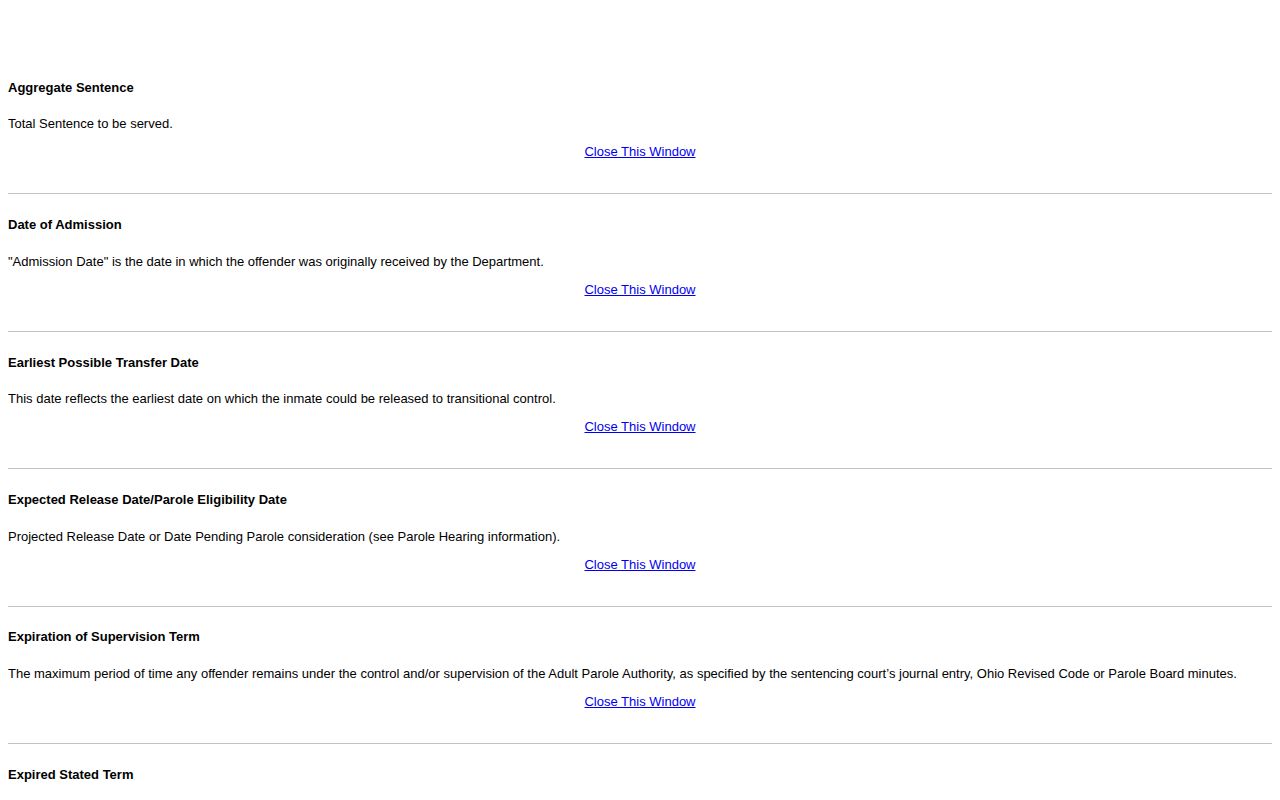
The definitions prevent an expected date, old institution name, or supervision address from being mistaken for a current custody fact.
Request Ohio Release Records
Ohio's Public Records Act generally permits a request for existing public-office records, subject to exemptions. A focused request is easier to identify. Give the person's full name, known booking or offender number, date of birth, facility, committing county, docket number, and an approximate custody span. Ask for named existing records, not a new explanation. A county request can seek the booking and release date and time, release event, receiving agency if recorded, booking identifier, public charge or bond fields, and a booking photograph if it is public.
- Identify whether the custodian was a county or municipal jail, ODRC, a federal agency, or ICE.
- For a local exit, contact the jail or sheriff records custodian in the county that held the person.
- For an Ohio prison term, request existing admission, sentence, release, supervision, and discharge records from ODRC Central Records.
- State the identifiers and date range with reasonable clarity. Ask for an electronic copy when available.
- If material is withheld or redacted, ask the office to identify the legal basis for that decision.
ODRC detail pages route records questions to Central Records at P.O. Box 430, Columbus, Ohio 43216. Ohio research did not verify one fixed statewide county fee, response time, or retention period. Those details depend on the custodian, medium, record schedule, and lawful review. ODRC also publishes no fixed online-retention span for ordinary fully discharged records. ORC 5120.21 restricts the full institutional and Adult Parole Authority file while allowing specified disclosures. Exempt material may be withheld or redacted.
The Ohio Attorney General's public-records guidance describes the statewide request framework.
That guidance is a starting point, while the office holding the jail or prison record decides the actual response.
Ohio Release Record Law
Ohio Revised Code 149.43 is the state's Public Records Act. It covers existing records kept by public offices but preserves statutory exemptions. The law does not make every investigative, medical, security, victim, parole, probation, juvenile, sealed, or expunged item open. A public office also need not create a custom analysis to answer a question. Records that remain available should be read as agency documents, not as a complete life or case history.
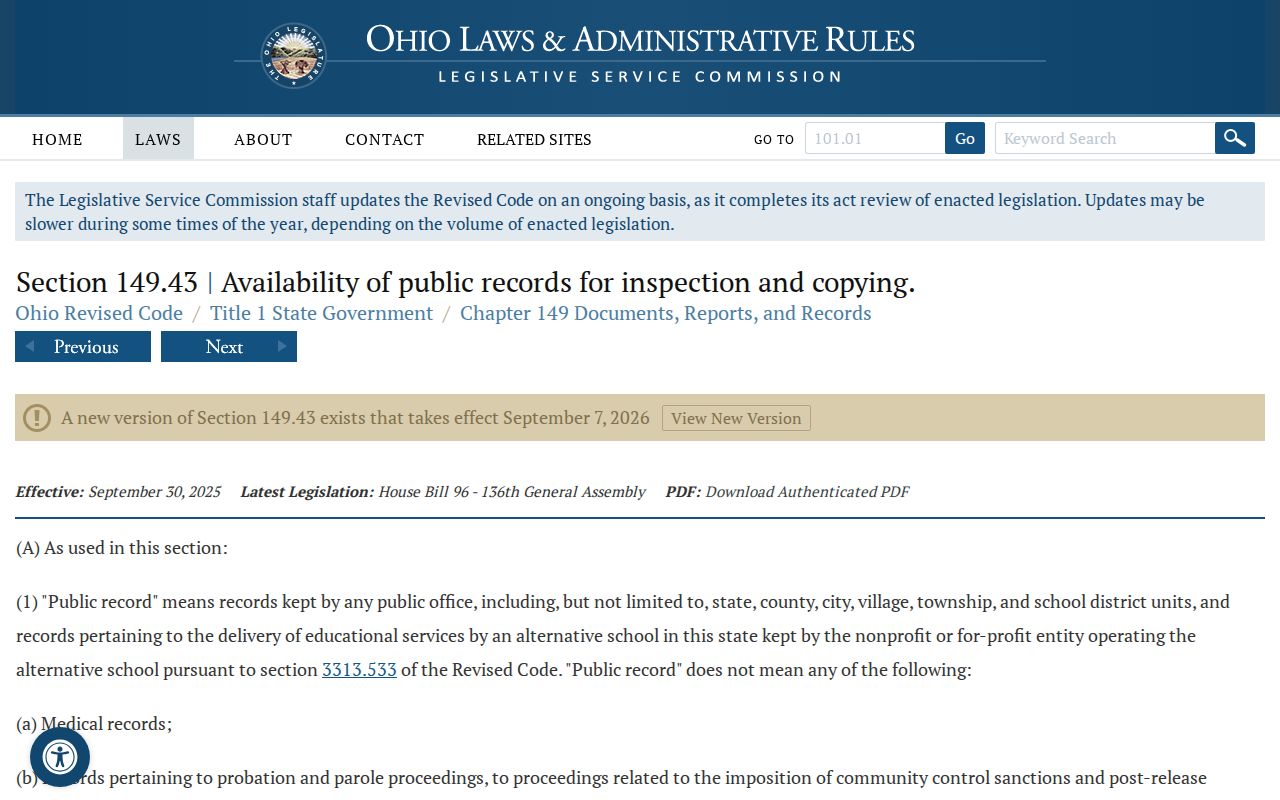
The statute is the governing source for a request, including the office's duty to address an identifiable existing record and any applicable exception.
Record scope: A release date proves that the named agency ended a custody episode. It does not by itself prove dismissal, innocence, final discharge, or freedom from every other hold.
Sealing or expungement can affect what a public search or clerk response displays, but the effect depends on the governing order and record type. A missing online result is not proof that no record ever existed. When the public result conflicts with a known case, confirm the docket and ask the originating custodian what public record remains available. The research cutoff was August 12, 2026, and the Ohio code site showed a later version of ORC 149.43 scheduled for September 7, 2026. The current statute should be checked again at publication.
Ohio Booking Photo Payment Law
Ohio has a specific protection involving booking photographs and related criminal-record information. ORC 2927.22 bars a publisher from negligently soliciting or accepting payment from the subject to remove, correct, modify, or refrain from publishing that material. Each improper payment is treated as a separate first-degree misdemeanor. The law also authorizes a civil claim for $10,000 or actual and punitive damages, whichever is greater, plus fees and costs.
The law has a defined limit. It does not require every sheriff or jail to publish a booking image. Nor does it make every photo public despite another valid restriction. An image request still goes to the office that created or keeps the booking record, and that office applies Ohio public-records law. The statute addresses the pay-to-remove practice without turning a commercial publisher into an official source.
Ohio Release Versus Discharge
Prison release can occur before state supervision ends. Under ORC 2967.16, the Adult Parole Authority may grant final release after satisfactory parole and issue a certificate of final release. The statute does not allow that final release earlier than one year after parole, or five years for a life sentence. After satisfactory post-release control, the authority may terminate supervision and issue a certificate of termination. Those certificates serve as the authority's official minutes and offer stronger proof that state supervision ended than an old prison exit date.
- Parole
- Discretionary release from prison for an eligible sentence while state supervision continues.
- Post-release control
- Adult Parole Authority supervision that follows specified felony prison terms.
- Community control
- Court-managed sanctions commonly understood as Ohio probation.
- Discharge
- The later end of the applicable state or court authority, not merely the prison gate event.
- Detainer
- A request or hold that can lead to transfer or continued custody by another authority.
No authoritative statewide source established one universal Ohio gate-money amount, clothing allowance, travel benefit, or central release site. Those logistics vary by institution and placement. No clean, current official total for annual Ohio releases, parole grants, or the statewide APA caseload was verified by the research cutoff either. A local practice or undated dashboard figure should not be presented as a statewide rule.
Find Ohio Released Inmates
The sound search path begins with the agency that held custody. ODRC is the first statewide source for a person who served an Ohio prison sentence. It is not a statewide county booking archive. For a county jail exit, identify the holding county and locate its sheriff, jail operator, and trial-court clerk. Search both a live roster and the durable release or booking record because a released person usually leaves the live list.
- Decide whether the known custody was county, state, federal, or immigration custody. Do not treat transfer as community release.
- For state prison, search ODRC first under Released, then repeat under APA Supervision. Compare identifiers and the full chronology.
- For local jail custody, use the Ohio County Directory to reach the correct local source, then compare the jail record with the trial-court docket.
- Check Ohio VINE for a source-agency event, but confirm any alert with the reporting jail or ODRC.
- For federal custody use BOP. For immigration custody use ICE. Each release applies only to that agency.
- When online searches fail, send a focused public-records request to the jail, ODRC Central Records, or the clerk that holds the record.
Roster warning: A missing name may mean release, transfer, a spelling mismatch, delayed data, or a system outside that roster. Confirm the event.
ODRC Ohio Release Search
The ODRC Offender Search has separate Incarcerated, Released, APA Supervision, and Violators at Large filters. Begin with the fewest reliable criteria. An offender number is strongest when known. It uses an A, R, or W prefix followed by six digits, and a five-digit female number receives a leading zero. A name search can use last name alone or first and last name. County of commitment means the sentencing origin, not the current location. Residential county and ZIP refer to the last recorded APA or violator-at-large information and may not be current.
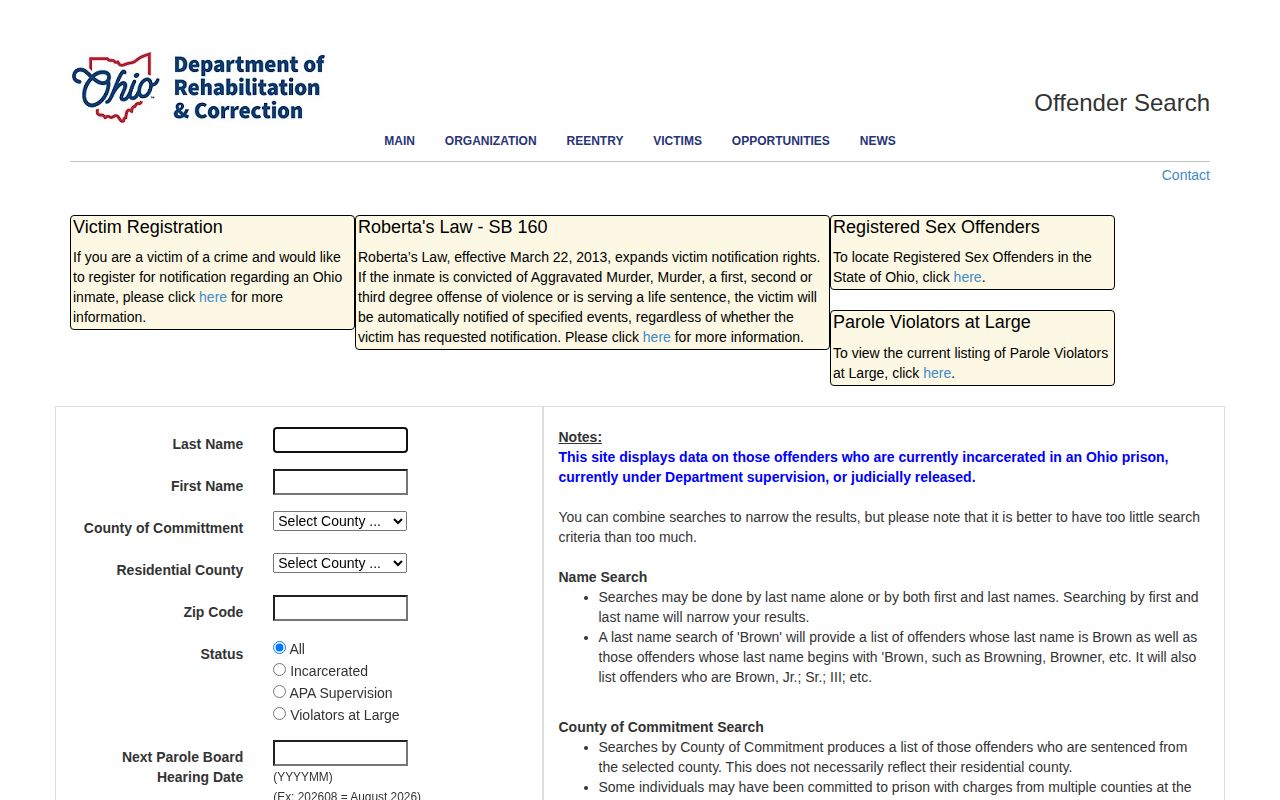
The filter design makes it possible to distinguish current prison custody from a released or supervised state-prison record.
Run a believed former prisoner under Released, then APA Supervision. Open every plausible result. Compare offender number, date of birth, admission, offense, statute, committing county, docket, and sentence. Never identify a person from name or photograph alone. If a result shows APA supervision but lists an institution, the status controls the present interpretation. The institution can be the last prison rather than a current residence. A projected date is also not proof that release occurred.
The ODRC released-result print view demonstrates the official layout used for a terminal released-family status.
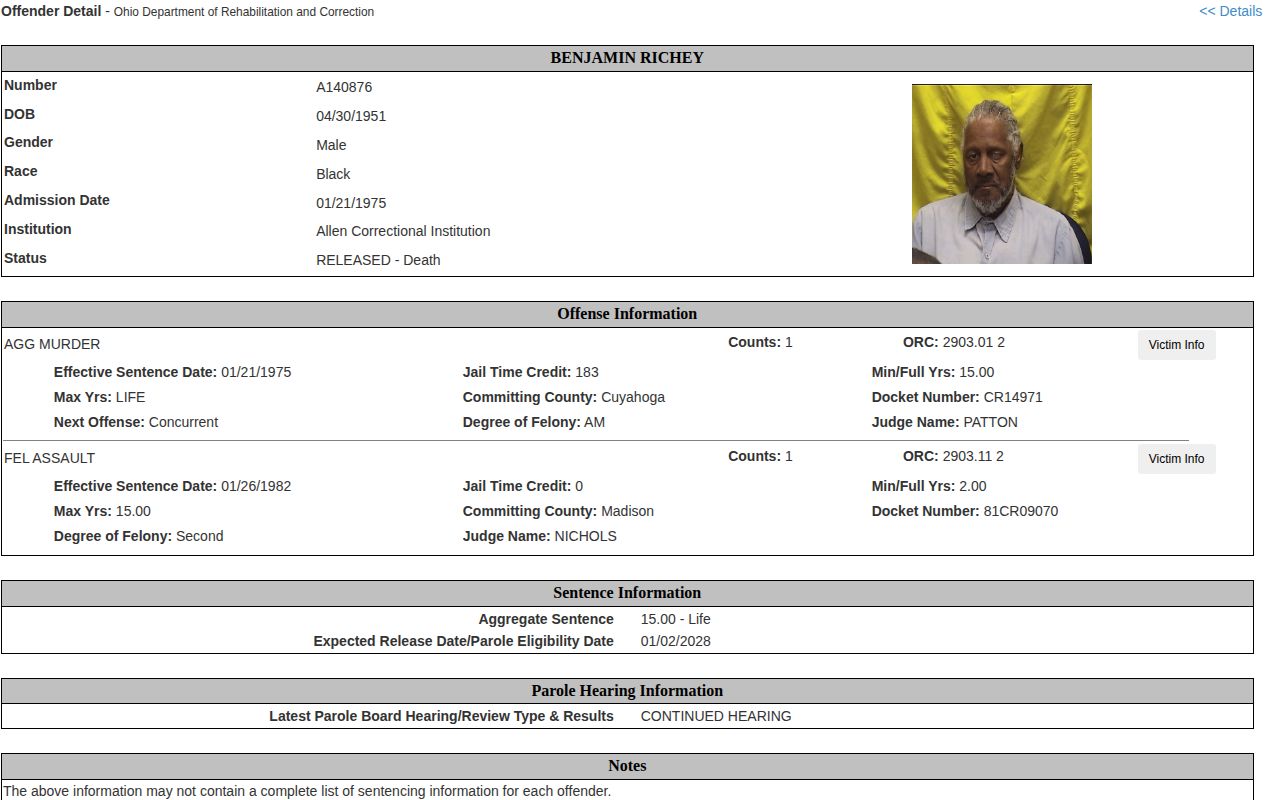
The exact status wording should be retained because a specific suffix can convey more than the general word “released.”
ODRC warns that sentence information may be incomplete and a supervision period can reflect an obligation from another offense. It has not published a fixed number of years that ordinary fully discharged records remain online. A no-result may reflect the search inputs, system scope, or online availability. For a deeper field-by-field review, use the ODRC offender search resource.
Ohio County Release Differences
Ohio's 88 counties do not publish release data in one uniform way. Large counties may use several jail buildings, overflow units, juvenile facilities, and vendor searches. Some rural counties rely on regional jails or short-term holding. Several courts send people across county lines to regional custody or community-based correctional facilities. The committing county, physical facility, and record custodian can therefore be three distinct facts.
A local roster disappearance is especially easy to misread. A person may have posted bond, finished a term, moved to ODRC, entered a regional jail, or transferred to another agency. Search the sending facility's release event, then identify the receiving agency when one is recorded. State prisons and reception institutions use ODRC after admission. County and municipal sites keep their own booking and release records. Federal, immigration, juvenile, and secure community-correction records follow their respective operators and committing courts.
Ohio Release Court Records
Ohio has no single public portal for every trial-court criminal docket. The secure Ohio Courts Network is not a general public case search. The Supreme Court's public docket covers Supreme Court cases filed on or after January 1, 1985, along with practice-of-law matters from January 1, 1989. Its opinion database covers published appellate material, not every local release order or disposition.
The Supreme Court of Ohio court directory routes users to the court system that handled the case.
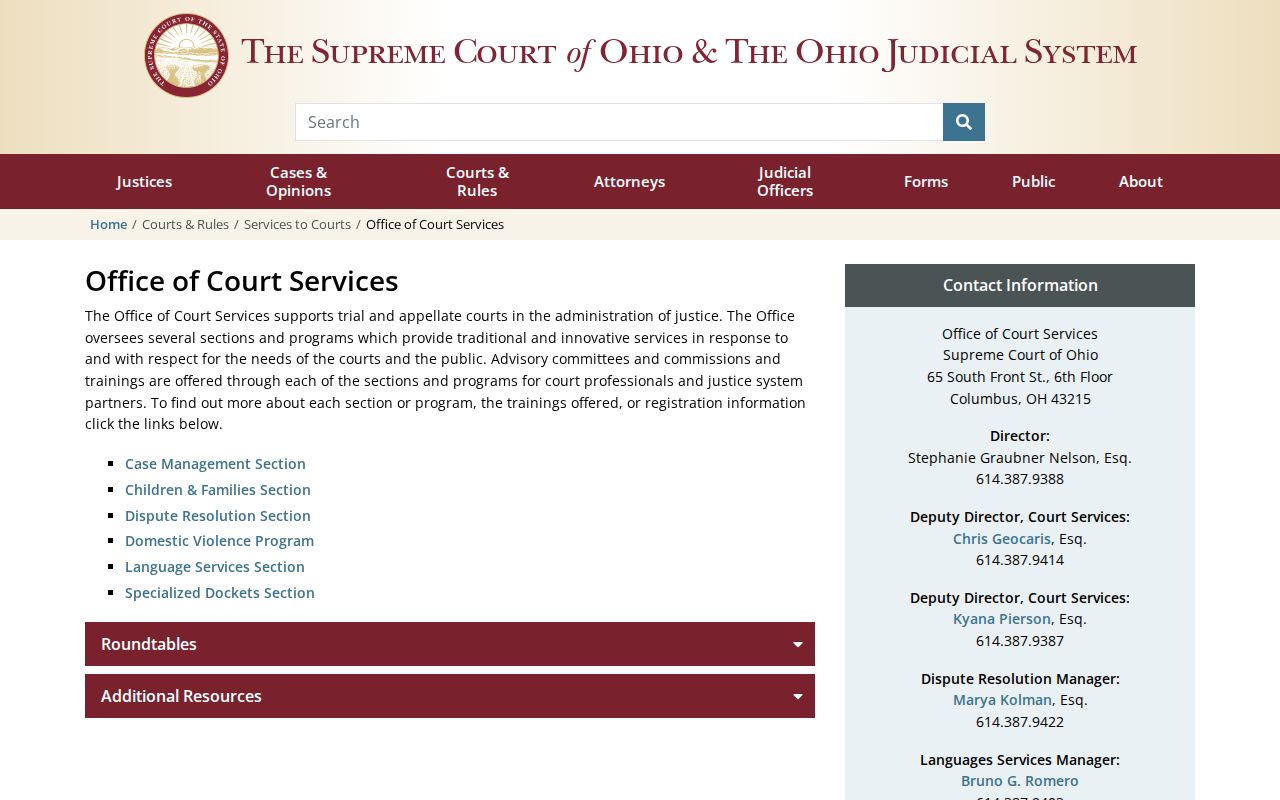
The correct local clerk may hold the bond entry, dismissal, sentence termination, judicial-release order, or probation discharge that explains the jail event.
Read the court and custody records together. A court entry can supply the legal basis for release, while a jail or ODRC event supplies the physical movement and date. The court record may also show a later order that changes the meaning of an earlier event. This decentralized path takes more care, but it is more accurate than treating the statewide court name as a universal criminal docket.
Ohio Release Supervision Checks
The Adult Parole Authority is the statewide source for parole, post-release control, and related state supervision. In ODRC, search APA Supervision and read the supervision start, period, office, expiration, and early-termination fields. Residential county and ZIP are last-recorded information and can lag. Direct confirmation belongs with the APA office identified in the individual record.
A Violators at Large result means the person left prison but is wanted for an alleged supervision violation. It is not a normal discharge, and the listed residential location is not a known current location. The public should not attempt apprehension. Law enforcement must confirm warrant information through its own systems. Probation is different. It is generally imposed and managed by the sentencing court, and Ohio has no public statewide person locator covering every county and municipal probation office. The clerk docket and court probation department are the verification route.
Ohio Release Alerts and Locators
Ohio VINE receives events from source agencies and supports county-jail, ODRC, and DYS custody information in official state materials. Search the specific person, compare the reporting agency and identifiers, then read the exact custody event and timestamp. Available notifications can include phone, email, SMS, and TTY. Telephone registration uses a private four-digit PIN followed by the pound key to acknowledge calls. VINE is an alert system, not a certified release record, and every municipal lockup should not be assumed complete.
The Ohio VINELink portal provides the state-specific search and registration entry.
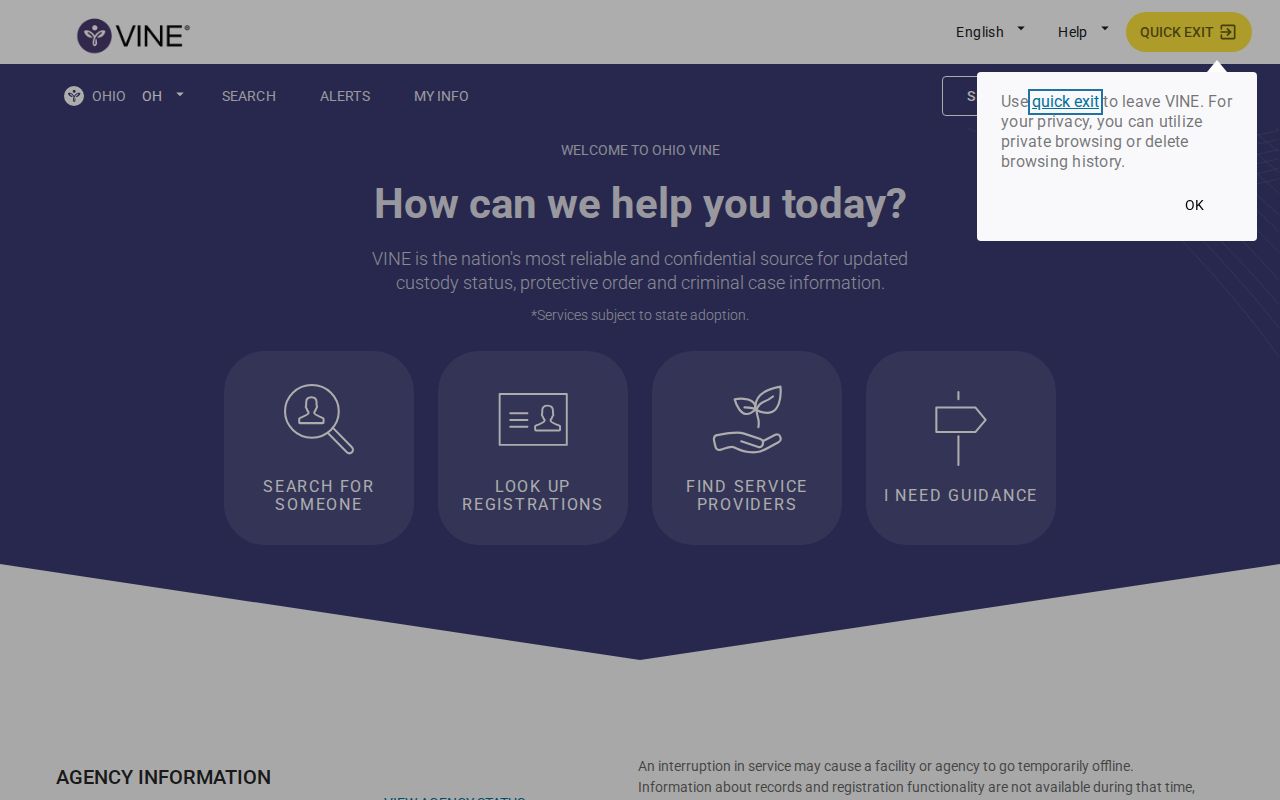
A release alert still needs confirmation because it may omit the legal reason, another hold, or later supervision.
Federal custody requires a separate system. The Federal Bureau of Prisons locator covers federal records from 1982 forward and searches by name or federal identifier. It can show register number, age, race, sex, release date, and location. A past date with no facility means release from BOP custody on that date. “Released” or “Not in BOP Custody” does not rule out custody or supervision elsewhere. BOP says its underlying data extract runs daily, and future dates can change.
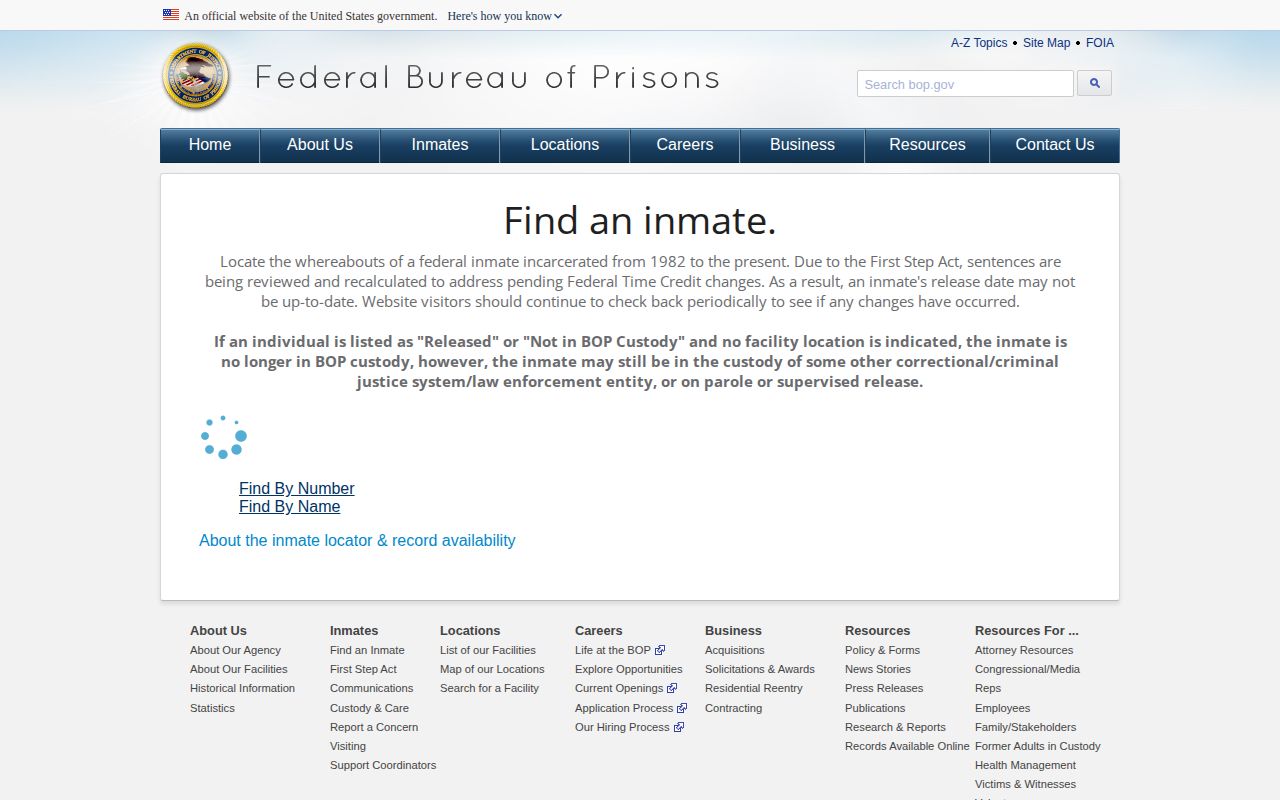
The federal result answers only the BOP custody question and should not be substituted for an Ohio county or ODRC record.
The ICE Online Detainee Locator System accepts a nine-digit A-number and country of birth, or exact name, country of birth, and an optional birth date. Short A-numbers need leading zeroes, and people under 18 are not searchable. ICE states that the system includes current detainees and people released from ICE custody during the prior 60 days. It is a limited immigration-custody window, not a statewide Ohio release archive.
Ohio Release Search Comparison
Each source covers a different slice of Ohio released inmates. Start with the known custodian and do not force one system to answer another agency's question. A current roster is strongest for present custody. A release event documents the end of that agency's episode. A court entry explains the order. Supervision and discharge records show what continued after the gate.
| System | Use it for | Key limit |
|---|---|---|
| County jail roster | People presently shown in a local jail | Released people often drop off, and transfer may look similar |
| County release record | Local exit date, event, and receiving agency when recorded | One custodian and custody episode at a time |
| ODRC Offender Search | Ohio prison release, APA supervision, judicial release, and state chronology | Not a county booking archive |
| Trial-court docket | Bond, dismissal, sentence, judicial release, and probation entries | Decentralized among local clerks |
| Ohio VINE | Source-fed custody events and optional notifications | Not a certified record or complete universal archive |
| BOP or ICE locator | Federal or recent immigration custody | Does not establish release from another authority |
A mismatch is a reason to check identifiers, dates, and agency scope. It is not a reason to guess. Full name, date of birth, booking or offender number, committing court, and custody dates provide the best comparison.
Ohio Release Facility Routes
Ohio releases and transfers begin in county jails, municipal holding sites, regional jails, state prisons, federal institutions, immigration placements, juvenile facilities, and secure community correction centers. Each facility type sends the record to a different system. County and municipal exits pair the operator's record with a court docket. ODRC institutions pair the offender detail with Central Records when more proof is needed. BOP and ICE use their own locators. Juvenile and community-correction records route through the operator and committing court.