
ODRC Release Record Scope
The Ohio Department of Rehabilitation and Correction runs the state prison system and publishes its own person-level search. The tool is not an archive of every Ohio arrest or jail booking. It covers people in Ohio prisons, people under department supervision, people judicially released, and former prisoners within the system's published online scope. Someone who posted bond from a county jail and never entered state custody may have no ODRC record. That distinction keeps a failed state search from being mistaken for proof that no local custody episode occurred.
The official ODRC site identifies the department that maintains the state record. Its public data comes from the state correctional and Adult Parole Authority systems. Prison release can end confinement while another phase continues. Parole and post-release control are forms of supervised release. Final discharge means the relevant state supervision has ended. These are different events, so the current status field should lead the reading of an ODRC profile.
The official agency landing page shows the statewide source behind an ODRC release record.
Use the agency search and records routes for a state prisoner, then use the committing court or county custodian when the custody was local.
Use the ODRC Offender Search
Open the official ODRC offender search. An offender number is the strongest starting point. ODRC requires an A, R, or W prefix and six digits; a five-digit number assigned to a woman takes a leading zero. A name search can use the last name alone or first and last name. Start with few fields. ODRC warns that too many filters can hide a valid result when one detail is wrong or has changed.
- Choose the Released status and enter the offender number when known. Otherwise, begin with the last name and add the first name only when needed.
- Repeat the search under APA Supervision. A person can be out of prison while parole or post-release control remains active.
- Open each likely profile. Compare birth date, offender number, admission, offense, statute, docket, sentence, and county of commitment.
- Read Status before the institution field. A listed prison may be the last institution rather than the person's current location.
- Review Parole or Release Detail, the expected-release or eligibility field, POA/PRD Date, and all supervision dates as separate facts.
The ODRC search screen shows the filters used to separate released records from current prison custody.
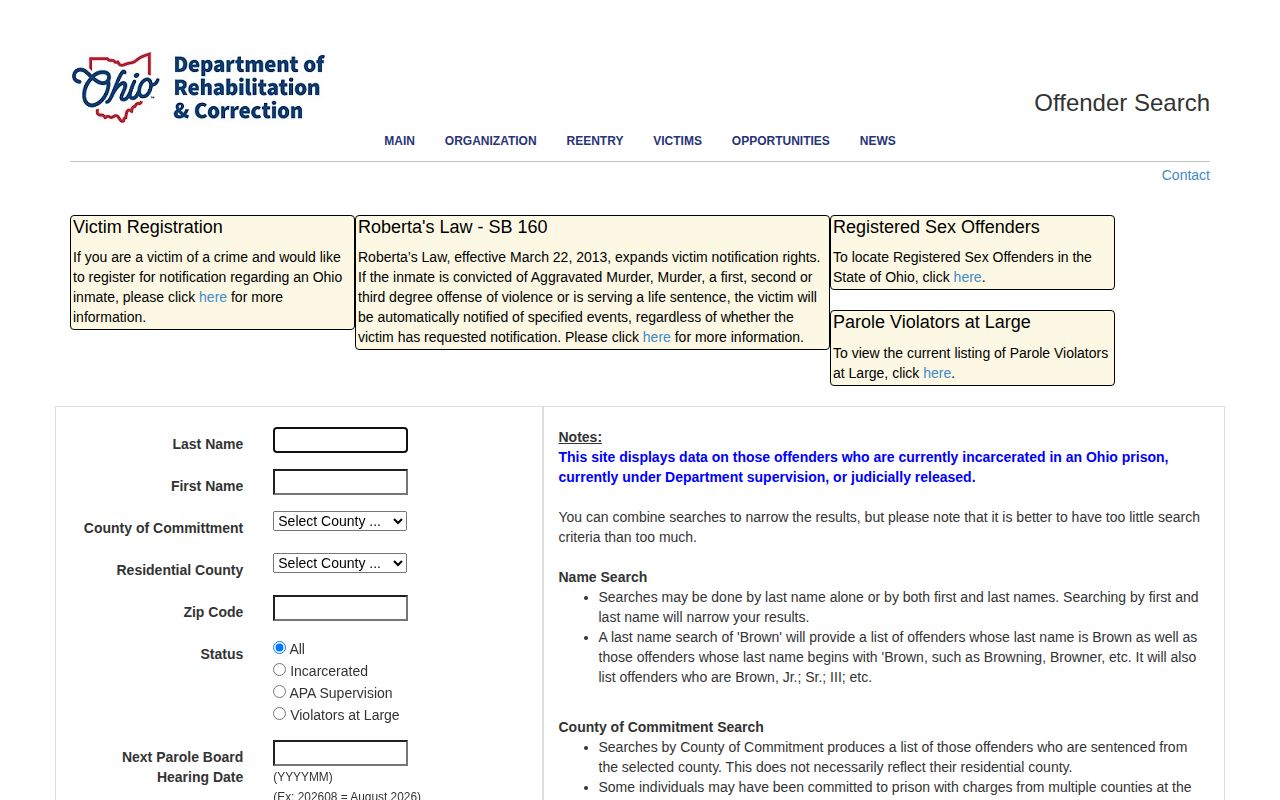
A broad first search is often safer than adding county, residential, hearing, and name fields at once.
Read Ohio Release Search Fields
An ODRC result works best as a chronology. Admission Date marks receipt into the department. Status describes the current ODRC category. The field labeled Expected Release Date/Parole Eligibility Date may show a projected sentence exit or the date when parole review becomes possible. Parole or Release Detail appears after a release or parole event and is blank during incarceration. POA/PRD means parole on or after/projected release date. Supervision start, period, office, expiration, and early termination describe the community phase.
| ODRC field | How to read it |
|---|---|
| Offender Number | The stable state identifier used to separate people with similar names. |
| Status | The current published ODRC category, such as incarcerated, released, APA supervision, judicial release, or VAL. |
| Admission Date | The date ODRC received the person, not the county arrest date. |
| Expected Release Date/Parole Eligibility Date | A combined field that must be interpreted with sentence type and status. |
| Parole or Release Detail | The recorded parole or release event after it occurs. |
| POA/PRD Date | A parole-on-or-after or projected-release marker, not proof of completed release. |
| Supervision Fields | Start, length, office, expiration, and early termination details for the APA phase. |
The ODRC field definitions explain the labels that surround an Ohio release date.
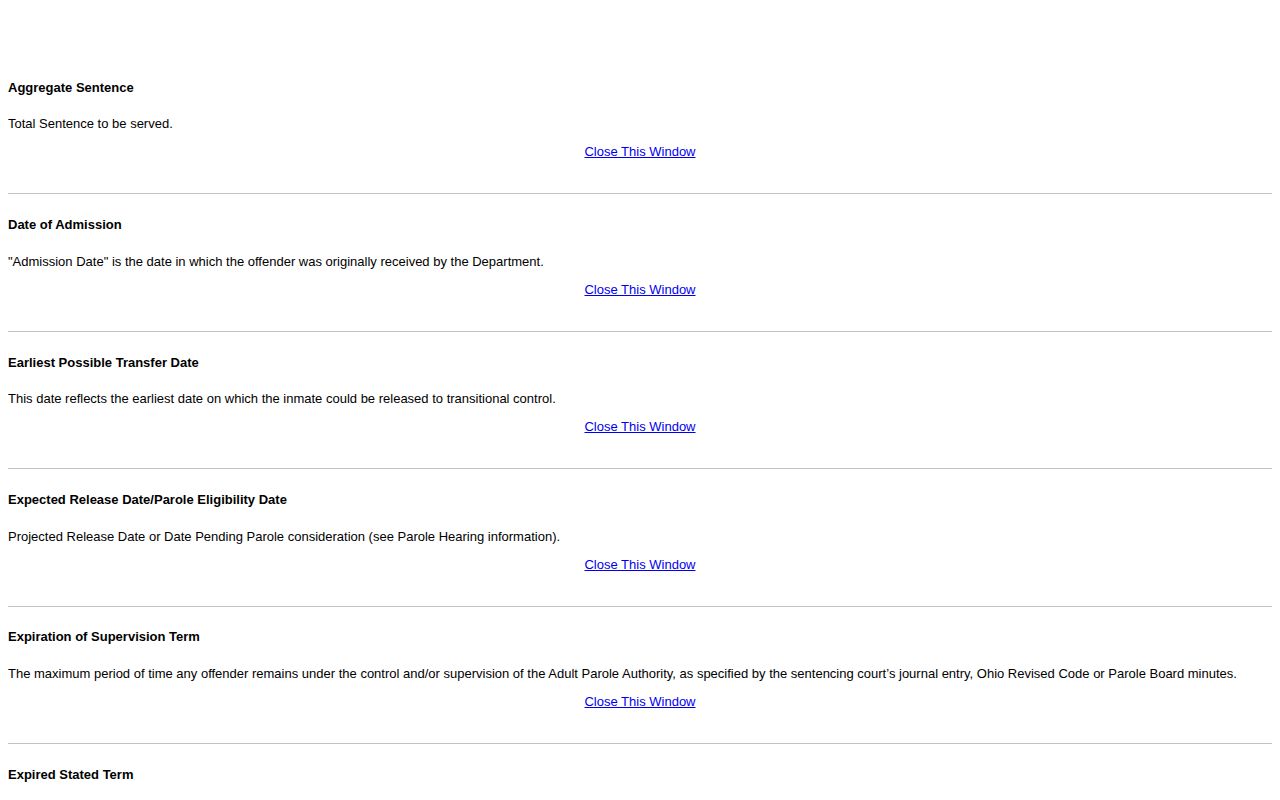
Those definitions prevent an eligibility date, transfer date, or supervision address from being read as a completed community release.
County of commitment means the place tied to sentencing. It is not a live location field. Residential county and ZIP apply to APA or violator-at-large records and reflect the last recorded supervision address. They do not prove where a person is now. A profile should never be matched from a name or photograph alone. Two or more stable identifiers provide a sounder match.
ODRC Released Inmate Status Meanings
ODRC does not use one universal label for everyone outside a prison. APA Supervision means prison confinement ended but department supervision continues. Judicial Release means the sentencing court released the person to community control. Violator At Large, often shown with an APA supervision label, means the person is alleged to have absconded from supervision. It is not an ordinary discharge, and the last residential location is not a known current location. A terminal record may also use a more specific released-family label.
The official APA supervision detail layout shows how release and supervision data can appear beside an older institution entry.
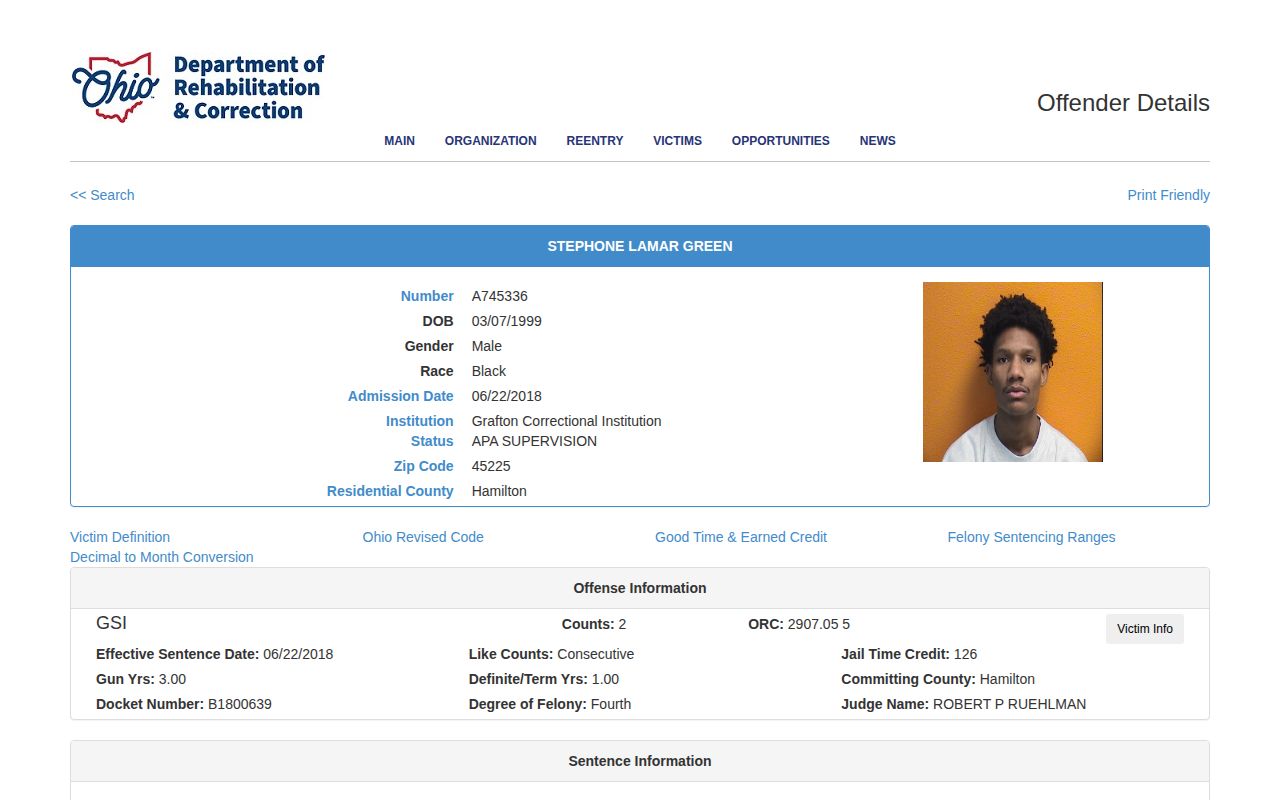
The status and supervision dates show the present ODRC phase more clearly than the last prison name.
A released label only closes the custody episode described by that record. It does not resolve a separate county hold, federal case, immigration detention, warrant, or later arrest. Likewise, prison release does not prove the underlying case was dismissed. It records movement out of a state correctional setting under a specified legal path.
Ohio Prison Release and Discharge
Ohio uses several release paths. End-of-term release follows the calculated sentence after valid jail-time and earned credit. Parole is discretionary release for an eligible sentence, meaning the Board may grant it but need not do so. Judicial release is ordered by the sentencing court under ORC 2929.20 and may place the person on court community control. Post-release control is a supervision term that follows specified modern felony sentences. Transitional control is monitored community confinement before sentence expiration or parole. It is not final discharge.
Ohio's earned-credit rules affect some sentence calculations, but no single formula applies to every person. Current qualifying confinement is governed by ORC 2967.194, with older confinement potentially governed by the earlier section. Jail-time credit is different. It credits qualifying confinement before sentence service rather than productive participation. Sentence structure, mandatory terms, exclusions, court action, and department review all matter.
- Parole
- Conditional release granted by the Parole Board for an eligible sentence.
- Post-release control
- State supervision required after prison for specified felony terms.
- Judicial release
- A sentencing-court order that permits release under court control.
- Transitional control
- Monitored placement before sentence expiration or parole, not full discharge.
- Final discharge
- The later end of the state supervision obligation, when supervision followed prison.
Exact timing belongs to the ODRC computation and the judgment entry, not a hand calculation. The separate Ohio projected release date record explains how to distinguish the combined expected-release and parole-eligibility field.
Prove Ohio Final Discharge
Leaving prison and completing supervision can occur years apart. Under ORC 2967.16, the Adult Parole Authority may grant final release after satisfactory parole and issue a certificate of final release. The statute bars that step before one year after parole, or five years for a life sentence. After satisfactory post-release control, APA may terminate supervision and issue a certificate of termination. The law treats these certificates as the Authority's official minutes.
A gate date proves that a prison custody phase ended. It does not prove that APA authority ended on the same day. For stronger proof, compare the ODRC status and supervision termination fields with Board minutes or the applicable certificate. Court community control is separate. Its end is shown by a court entry, not an APA certificate. This distinction matters when verifying whether supervision remains active.
Note: No official source verified one statewide gate-money amount, travel benefit, clothing allotment, or single Ohio release-processing location.
Ohio Release Status Can Mislead
Ohio's unusual mix of APA Supervision, Judicial Release, Violator At Large, and terminal Released wording makes field-by-field reading essential. A search result can place an old institution beside community-supervision data. The residential county and ZIP are last-recorded APA information, not a promise of present residence. A VAL label signals an alleged supervision violation, not a routine end of custody. Each label answers a narrow question about ODRC authority.
The official released-result print view demonstrates that a released-family status can carry a specific suffix.
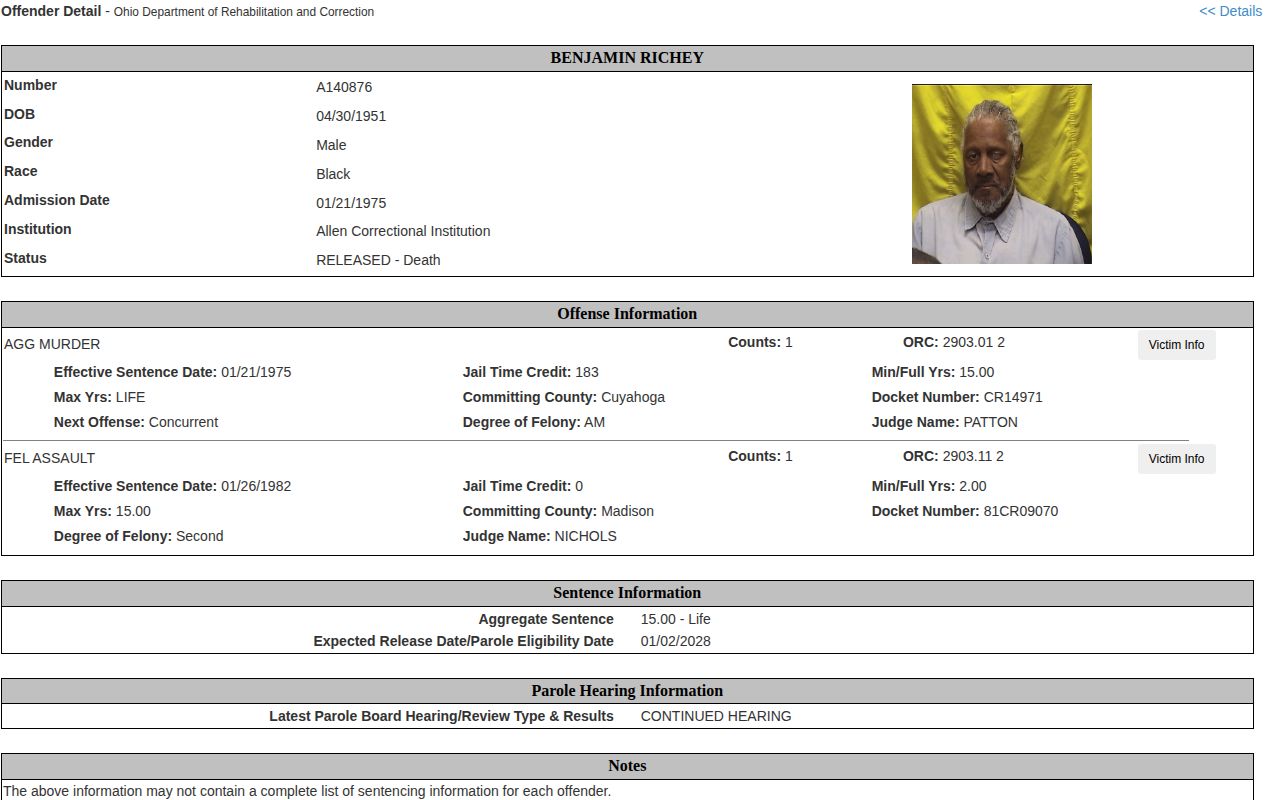
Copy the agency's exact words, then explain what the displayed category does and does not establish.
This taxonomy is why locating a name is only the first task. A defensible reading links identity, present status, release detail, and supervision dates. If a field is blank or unclear, do not substitute a nearby date. Seek the underlying record from ODRC or the sentencing court.
The distinction also affects how old information is used. ODRC has not published a fixed period for keeping ordinary fully discharged profiles in the public search. A missing result may stem from the search inputs, the system's scope, or online availability. A profile that remains visible may preserve an institution or address from an earlier phase. Neither outcome should be stretched beyond what the fields support. Central Records can confirm existing state records, while the sentencing docket can establish the court action tied to admission, judicial release, or sentence change.
Ohio State or County Release
ODRC covers sentenced state prisoners and the department supervision that can follow. County and municipal jails document local custody. A local exit can result from bond, recognizance, dismissal, time served, completion of a local term, a court order, or transfer. A transfer to ODRC, another jail, BOP, ICE, or a medical setting ends the first jail stay but does not show release to the community. The physical release record and court docket should be read together.
| Custody path | Primary record | What confirms the exit |
|---|---|---|
| Ohio state prison | ODRC offender detail | Status, parole or release detail, and supervision fields |
| County or city jail | Jail booking/release record | Release time, event type, and receiving agency when recorded |
| Local court authority | Clerk docket | Bond, dismissal, sentence, judicial release, or transfer order |
| Federal prison | BOP Inmate Locator | Federal release date and custody label |
| Immigration detention | ICE locator | Recent ICE custody result within the system's scope |
The Ohio County Directory routes a local jail release to the county that created the booking and movement record. Start with the physical custodian, then check the committing court if the legal basis for the exit is unclear.
Request ODRC Release Records
The online search has limits. ODRC says sentence information may be incomplete, and a displayed supervision term may reflect an obligation from a different offense. The department has not published a fixed online retention period for ordinary fully discharged records. A no-result may reflect input errors, scope, or online availability. It does not prove that a state-prison episode never occurred.
For an existing record, identify the person by full name, offender number, date of birth, committing county, docket, and an approximate admission and release span. Ask for the admission and release chronology, public sentence-computation material, parole or release detail, supervision dates, and any final-release or termination certificate. Ohio's Public Records Act permits requests for existing public records, subject to exemptions. The office need not create a new explanation or calculate a new date.
ORC 5120.21 restricts the full institutional and APA file while permitting specified disclosures. Expect lawful exemptions and redactions. A focused request for named existing records is more useful than asking the office to narrate the person's history.
The Ohio Attorney General's public-records guidance provides statewide context for clear requests and agency responses.
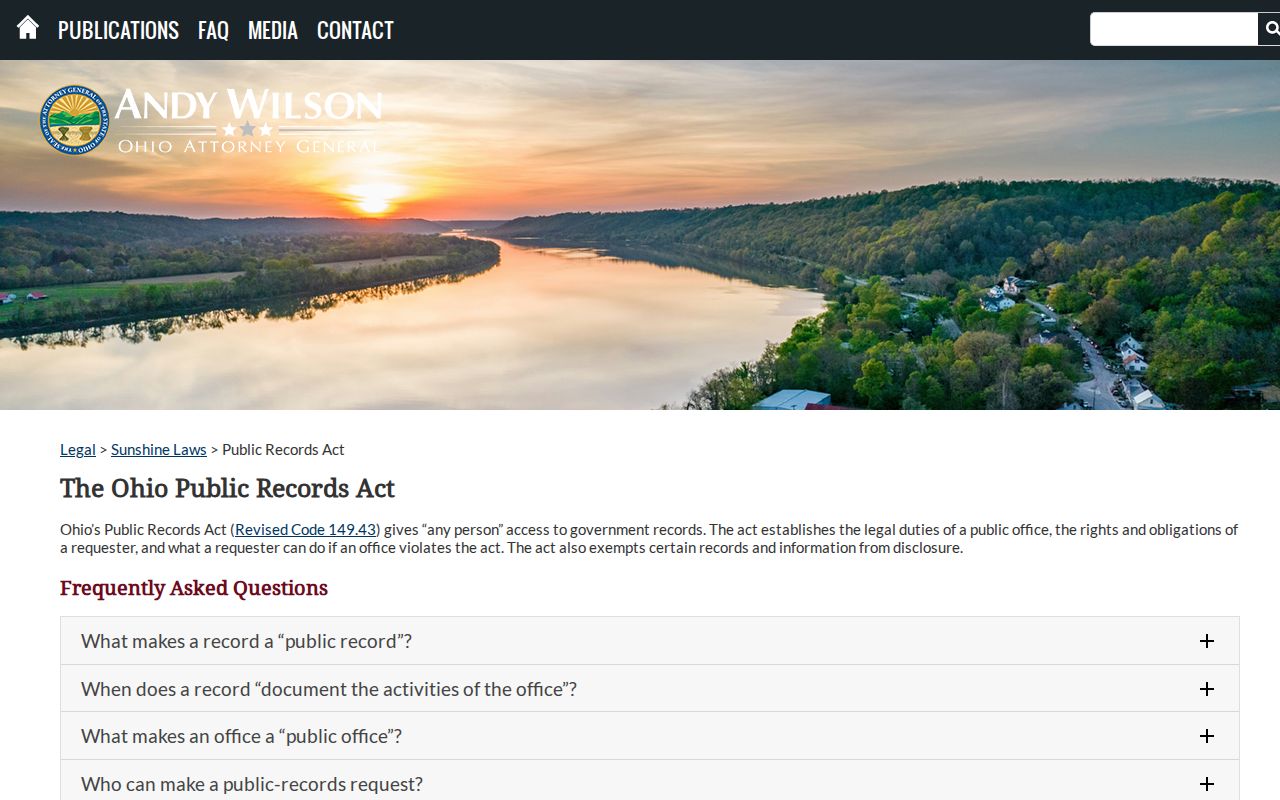
The request should name the record sought, allow for redactions, and preserve the agency's exact release and supervision terminology.
Confirm an Ohio ODRC Release
Build confirmation from several matching facts. First, confirm identity through offender number, birth date, committing county, docket, admission, offense, and sentence. Next, read Status and Parole or Release Detail. Then determine whether supervision follows. Finally, compare the state result with the sentencing docket or requested record when the displayed date is ambiguous.
A future date is not proof of release. A past parole-eligibility date is not proof that the Board granted parole. APA Supervision proves release from prison while state supervision continues. Judicial Release points back to the sentencing court. Violator At Large describes an alleged supervision breach. Terminal release wording should be preserved as written. This sequence keeps an expected event separate from an event that has already occurred.
ODRC is the authoritative statewide starting point for a person who served an Ohio prison sentence. It is one part of the record, not a universal custody history. The strongest result joins the official profile, the correct sentence type, release detail, supervision end proof when applicable, and the court record tied to the commitment.