
Ohio Parole and Probation Compared
Parole is discretionary release from an eligible prison sentence before final discharge. The Ohio Parole Board makes the release decision, and the Adult Parole Authority, or APA, manages the state supervision that follows. Post-release control is also APA supervision, but it follows specified modern felony prison terms under Ohio Revised Code 2967.28. A person can be out of prison and still remain under ODRC authority.
Probation is different. Ohio courts often use the term community control for a court-ordered alternative or follow-up to confinement. The sentencing Common Pleas, Municipal, or County Court and its probation department hold that record. Ohio does not offer one public statewide person locator that covers every local probation office. The docket and the court named in the judgment are therefore central to a probation check.
| Record type | Who creates it | Best verification source |
|---|---|---|
| Parole | Ohio Parole Board and APA | ODRC status, Board result, and assigned APA office |
| Post-release control | Sentencing law, ODRC, and APA | ODRC supervision fields and termination record |
| Judicial release supervision | Sentencing court | Court entry plus ODRC status when a prison case is involved |
| Probation or community control | Sentencing court | Local clerk docket and court probation department |
The ODRC field definitions show how state terms appear in the public system.
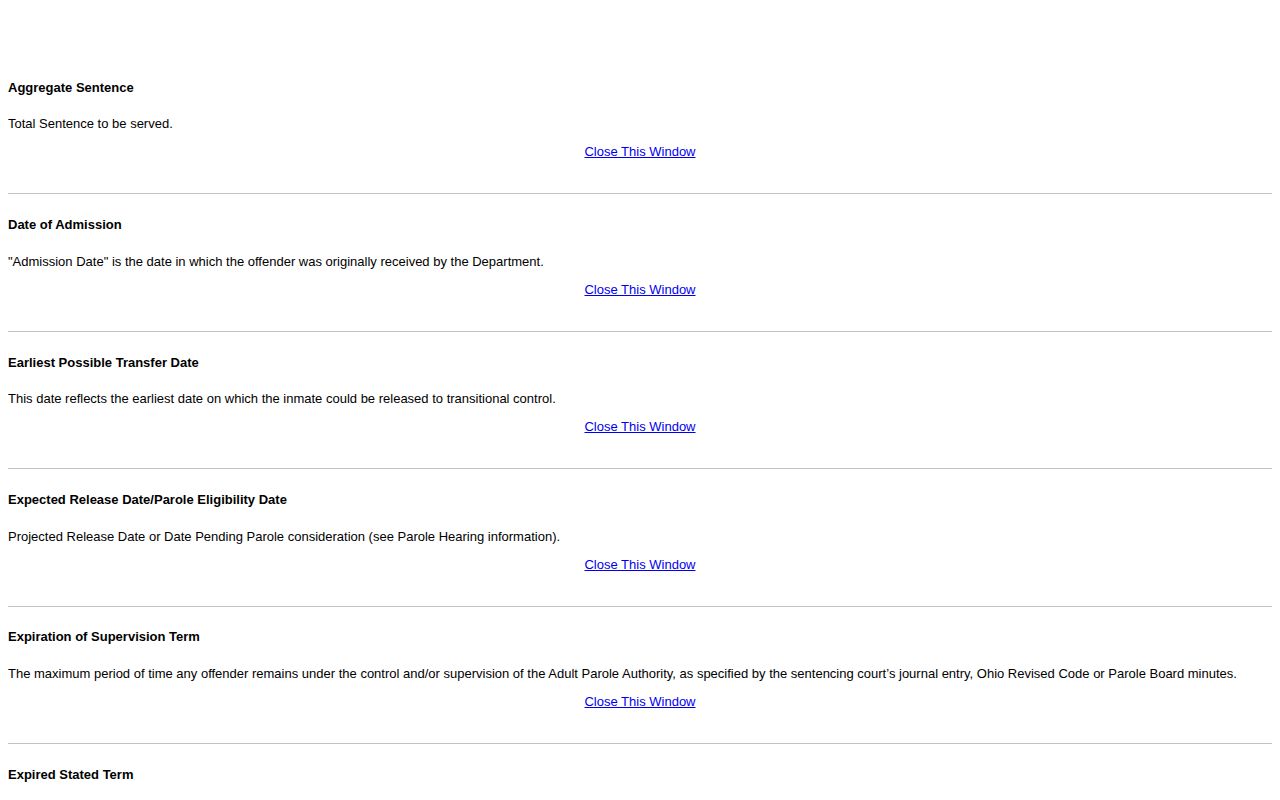
Those definitions keep an APA supervision label from being mistaken for incarceration, full discharge, or a current residential address.
- Parole
- Conditional release granted for a sentence that remains under state authority.
- Post-release control
- APA supervision imposed after certain prison terms.
- Probation or community control
- Court-ordered supervision administered through the sentencing court.
- Discharge
- A formal end to the specific custody or supervision obligation shown by the controlling agency.
Check Ohio Post-Release Supervision
Begin with the kind of custody that preceded release. A person who served an ODRC prison term may appear in the state offender search as APA Supervision, Judicial Release, Released, or a more specific status. Someone who left a county jail after a local sentence may instead report to a court probation department and have no ODRC supervision record. Search with enough identity detail to avoid joining two people with the same name.
- Open the ODRC offender search and try the offender number first. The number uses an A, R, or W prefix followed by six digits.
- If the number is unknown, search by last name or by first and last name. Start with few filters because extra criteria can hide a valid match.
- Run the
APA Supervisionstatus filter and compare date of birth, offender number, committing county, docket, offense, and admission data. - Read supervision start, period, office, expiration, and early-termination fields as a group. Treat residential county and ZIP as last-recorded data.
- If ODRC has no relevant result, use the Ohio courts directory to locate the sentencing clerk and probation department.
The official ODRC offender-search form presents the status choices used for the state part of that check.
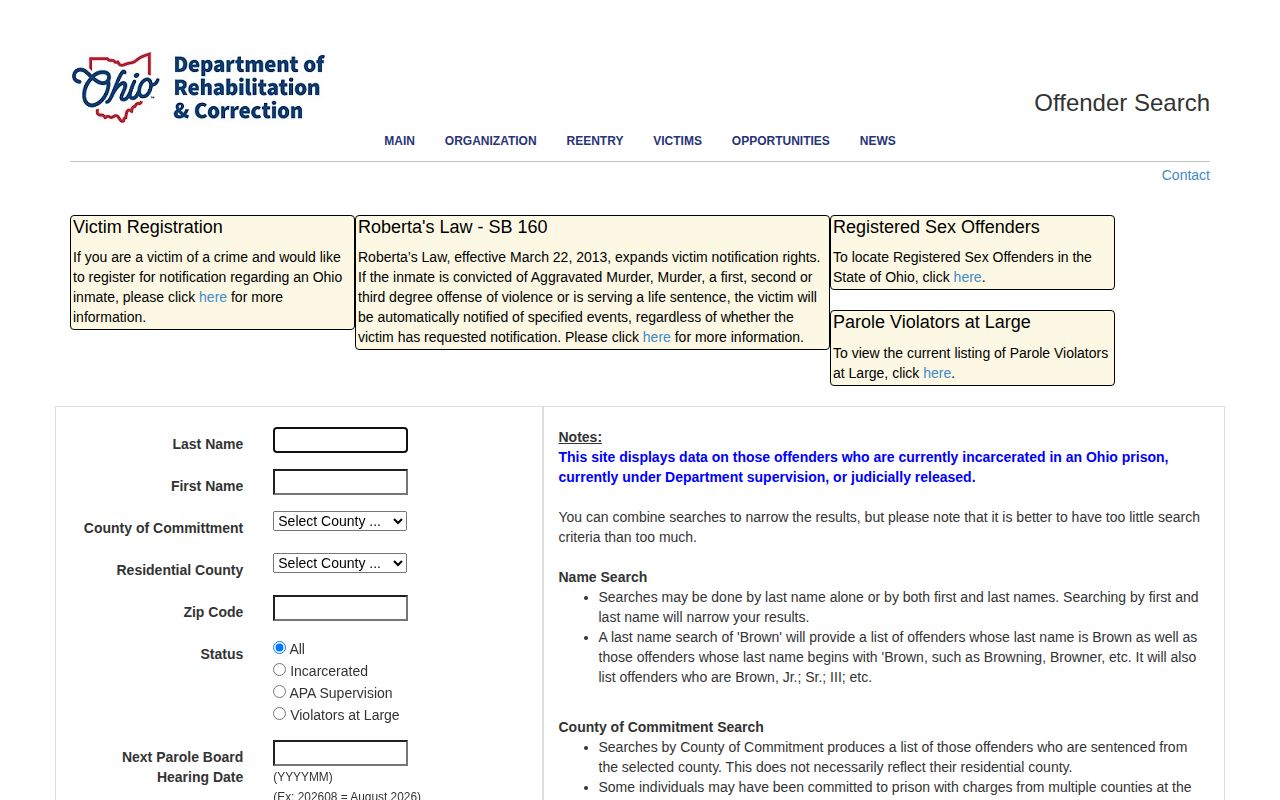
The form covers ODRC incarceration and supervision, not every person released from an Ohio county or municipal jail.
When the lookup shows a supervision office, that office is the direct confirmation point for the state record. If a court imposed community control, use the clerk entry and court probation department instead. The statewide Ohio County Directory can route a county-based inquiry without treating ODRC as a universal jail archive.
Read Ohio APA Release Fields
An ODRC detail is best read as a timeline. Admission marks receipt into the state system. Current status states the Department category at the time of the lookup. The expected release or parole eligibility field may describe a projected prison exit or only the first point when parole could be considered. It cannot stand alone as proof of release.
After prison, the supervision fields take on more weight. The start date marks the community phase. The supervision period and expiration describe the recorded term, while an early-termination field may show that APA authority ended before the expected date. The office identifies where to verify the state record. A separate parole or release detail can record the release event, yet ODRC warns that sentence data may be incomplete and a supervision period may arise from another offense.
The official APA detail layout shows how projected-release and supervision information can occupy one record.
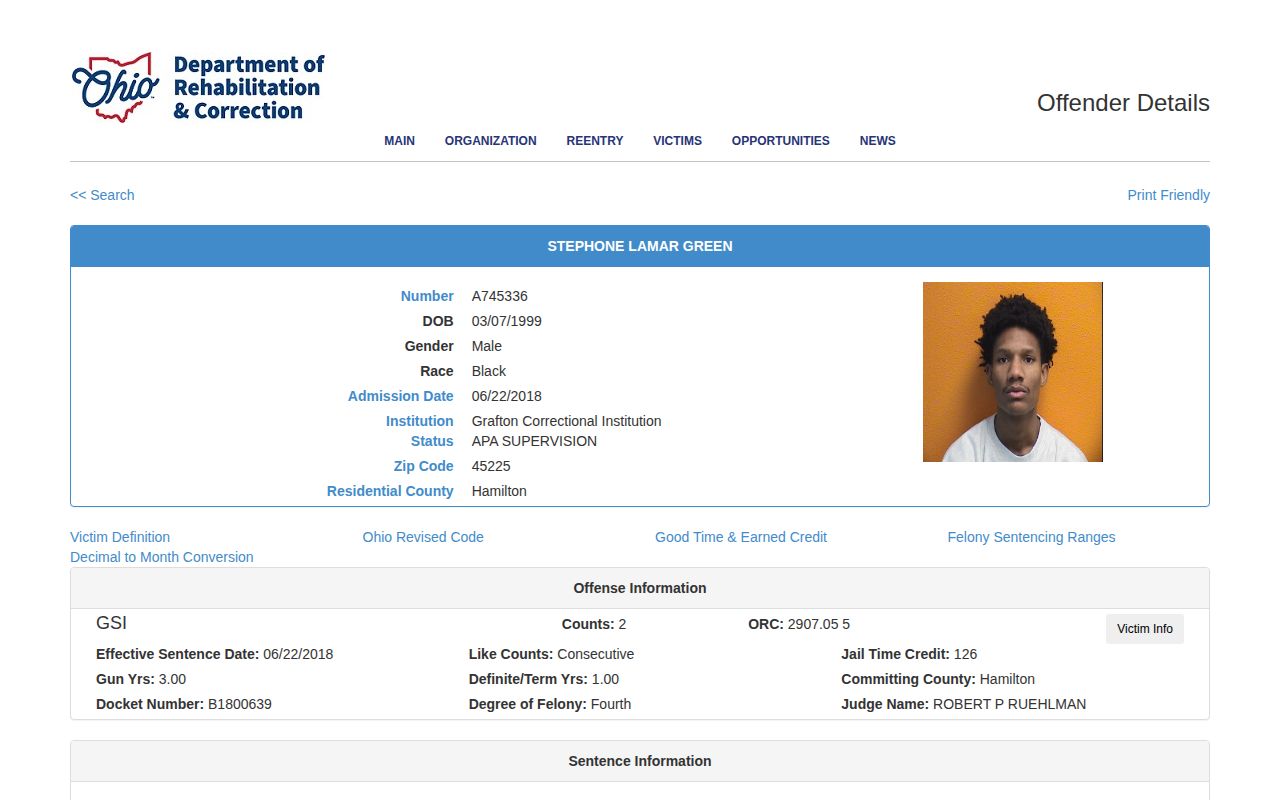
This layout demonstrates why the current status must be read beside the date fields, office, and supervision period.
| ODRC field | Safe reading |
|---|---|
| Status | Present ODRC category, including APA supervision or released wording |
| Expected Release Date/Parole Eligibility Date | A compound field that may indicate projection or eligibility |
| Parole or Release Detail | Recorded release or parole event after the custody phase |
| Supervision office | APA office tied to the public record |
| Expiration or early termination | Recorded end point that still needs official confirmation |
Note: A last-recorded residential county or ZIP does not certify where a person lives now.
Ohio Release Status Boundaries
Several Ohio labels describe release without describing the same legal stage. Judicial release comes from the sentencing court under ORC 2929.20 and may place the person on community control. Transitional control under ORC 2967.26 is monitored community confinement before sentence expiration or parole. It is not final discharge. End-of-term release follows the calculated prison term, while parole depends on a Board decision for an eligible sentence.
The label therefore controls the next verification step. A judicial-release entry should be matched to the signed court order and local supervision record. Transitional control calls for the ODRC sentence and placement fields. Parole requires the Board result and APA record. Post-release control requires the ODRC supervision term and its later termination. Treating all four as simple probation erases who has authority and which document can show completion.
County-jail release has another boundary. Bond, recognizance, dismissal, time served, completion of a local term, court order, and transfer can all remove a person from a jail roster. None establishes APA supervision by itself. A transfer to ODRC ends the county stay but begins or continues state custody. The jail movement and court docket should be read before choosing the supervision system.
A clean status statement names both layers: the person left a stated facility on a documented event, then entered a stated form of supervision if the record shows one. That wording avoids calling a transfer a community release or calling an expired prison stay a completed court-probation term.
Ohio Parole Violator Records
The Violators at Large category has a narrow meaning. It identifies published APA absconder information under the state supervision framework. An absconder is a person alleged to have stopped complying or reporting while state authority remains active. It is not the same as a routine discharge, and it does not prove a new conviction.
Check the ODRC Violators at Large list by official identifiers. Do not use the last-recorded residential location as a present-location claim. Members of the public should not attempt to apprehend someone. Warrant validity and enforcement status must be confirmed through law-enforcement systems.
The official ODRC agency page identifies the state department responsible for the APA record and its public systems.
The agency source matters because both ordinary supervision and violator records may concern someone outside prison, yet only the latter reflects an alleged unresolved violation. A separate arrest, county warrant, or court-probation issue may not appear in the APA list at all. Check the office that owns that other record instead of extending the ODRC label beyond its published scope.
Ohio Final Release Certificates
Ohio gives formal discharge paperwork special force. Under ORC 2967.16, APA may grant final release after satisfactory parole and issue a certificate of final release. The law does not permit that parole certificate earlier than one year after parole, or earlier than five years for a life sentence. After satisfactory post-release control, APA may terminate control and issue a certificate of termination.
The statute treats those certificates as APA's official minutes. That makes the final certificate stronger evidence that state supervision ended than an old prison exit date, a projected date, or a screen that merely shows the person left a facility. The exact document matters. A certificate of final release addresses parole, while a certificate of termination addresses post-release control.
Court probation ends through a different record. Look for a signed court entry showing termination, completion, revocation, or another final disposition. A prison-release record cannot prove that locally ordered community control ended. If records conflict, ask the agency that created the disputed status to reconcile it against the signed entry or certificate.
The ODRC released-result format illustrates terminal release wording in the state system.
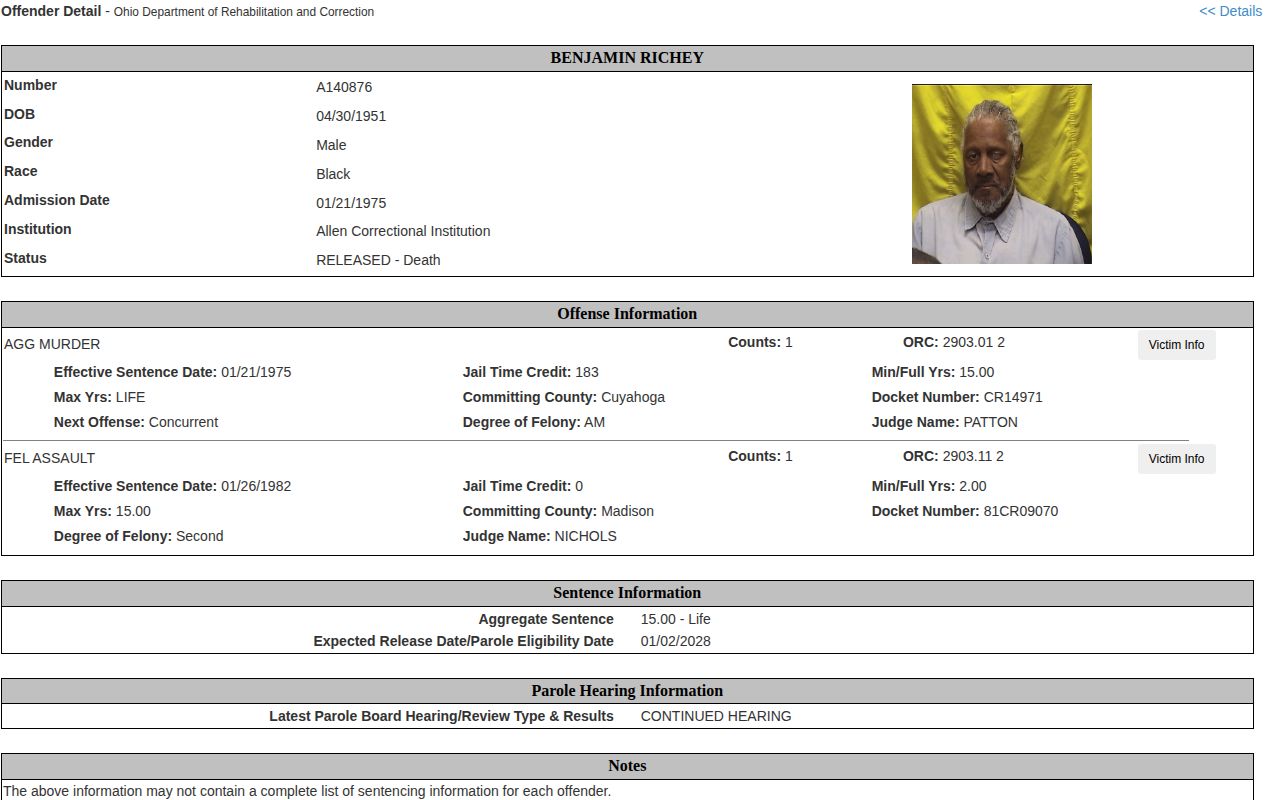
The public result is useful context, but the statutory certificate remains the clearest record of completed APA supervision when one was issued.
Resolve Ohio Supervision Conflicts
A complete check may require three records. The jail or prison movement record shows the physical exit. The court docket shows the judge's order. ODRC and APA records show state custody and supervision. Each answers a different question, so one agency should not be asked to certify another agency's act.
For an ODRC records request, give the full name, offender number, date of birth, committing county, docket, and approximate admission and release span. Ask for existing nonexempt records such as the admission and release chronology, supervision start and end, release detail, and any final-release or termination certificate. Detail pages direct questions to Ohio Department of Rehabilitation and Correction, Attn: Central Records, P.O. Box 430, Columbus, OH 43216.
ORC 5120.21 restricts the full institutional and APA file while allowing specified disclosures. Expect lawful exemptions or redactions. A requester should ask for named existing records, not a new explanation created from the file. When the issue is probation, direct the same clear identity and case information to the sentencing clerk and court probation office.
The distinction can be stated in one line: custody exit → state or court supervision → formal termination. Skipping the middle record is the common source of a false discharge claim. Ohio parole hearing records may explain how an eligible prison sentence reached the release-decision stage before APA supervision began.
A public ODRC no-result is not proof that state supervision never existed. ODRC publishes no fixed online retention period for ordinary fully discharged records. Search choices, identity inputs, and online availability can all affect the result. Central Records and the sentencing docket are the fallback when a known prison case no longer produces a clear public match.
For court probation, use the county and court named in the judgment, not the county where the person was last seen. Ohio's Supreme Court docket is limited to Supreme Court matters, and the statewide opinion database is not a universal trial docket. The courts directory routes to the correct local clerk, which can supply the signed entry that started, changed, or ended community control.