
Ohio VINELink Custody Coverage
Ohio VINE is the statewide notification program reached through VINELink. Official Ohio descriptions include county jails, the Ohio Department of Rehabilitation and Correction, and the Department of Youth Services. The system receives custody events from its source agencies. It does not create the jail movement, prison status, or court order.
Coverage must be read at the agency level. A participating county jail result is not an ODRC record, and an ODRC result is not a county booking archive. Municipal holding cells can have short stays and separate data practices. Official statewide branding does not prove that every municipal lockup or every present county feed is complete at the moment of a search.
The official Ohio VINELink state page is the correct entry for a person search and registration.
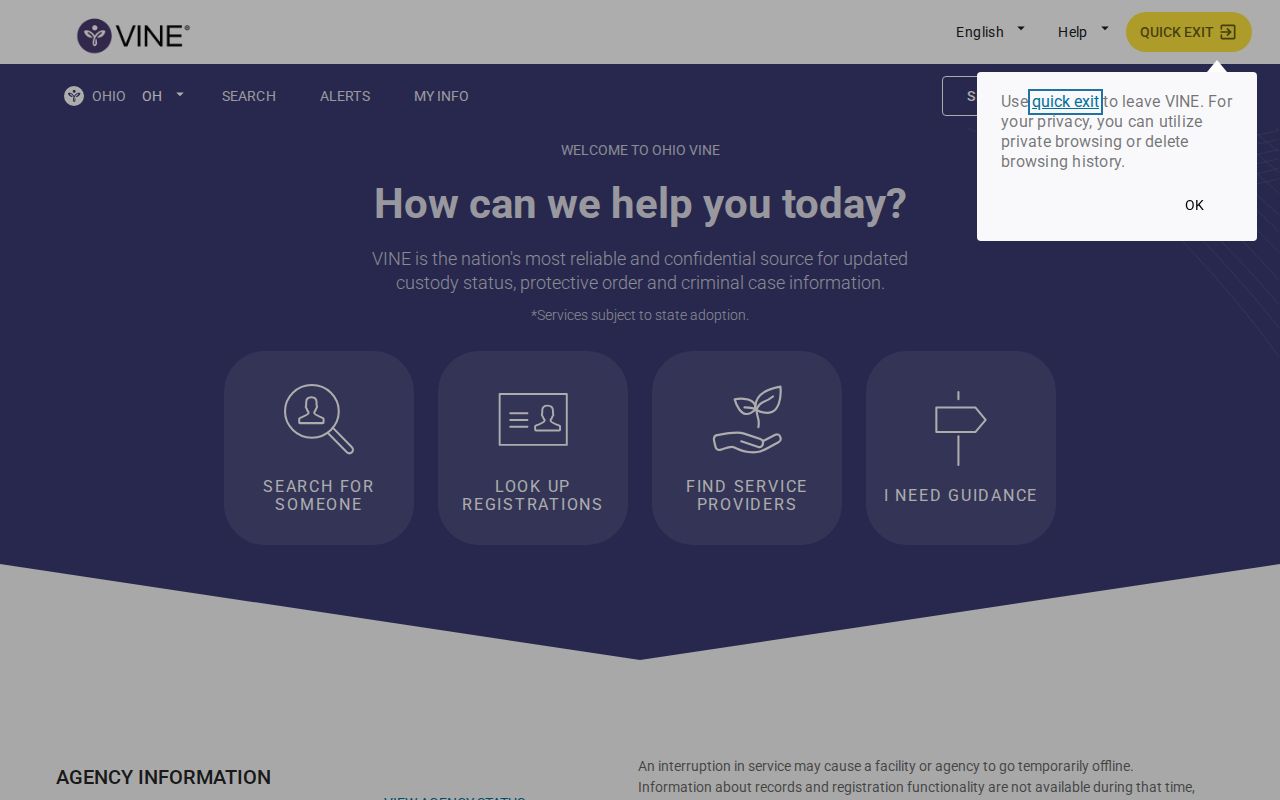
The state-specific entry helps keep an Ohio search separate from another jurisdiction with a similar name or identifier.
- VINE
- The notification network that receives custody events from participating agencies.
- VINELink
- The public web interface used to search records and register for available alerts.
- Source agency
- The jail, ODRC unit, or other participating custodian that sends the event.
- Release event
- A reported end to that custody episode, which does not by itself prove every other hold or supervision term ended.
Search Ohio VINELink for One Person
Use the most precise information already known. A name search can return more than one person, and spelling variations can hide the expected record. Never select a match from the name alone. Compare the reporting agency, offender or booking identifier, custody location, and any other identity details the result makes available.
- Open the Ohio state page and choose the person or offender search offered by the interface.
- Enter the name or identifier available for the person. Keep the first search broad enough to allow spelling and field differences.
- Review each result's reporting agency before opening it. County jail, ODRC, and youth custody records have different owners.
- Compare all available identifiers and case details. Do not rely on a photograph or a common name by itself.
- Read the exact status, event, facility, and timestamp. Save the access date because source-fed details can change.
The Ohio Attorney General's VINE guidance explains the state's notification routes and registration process.
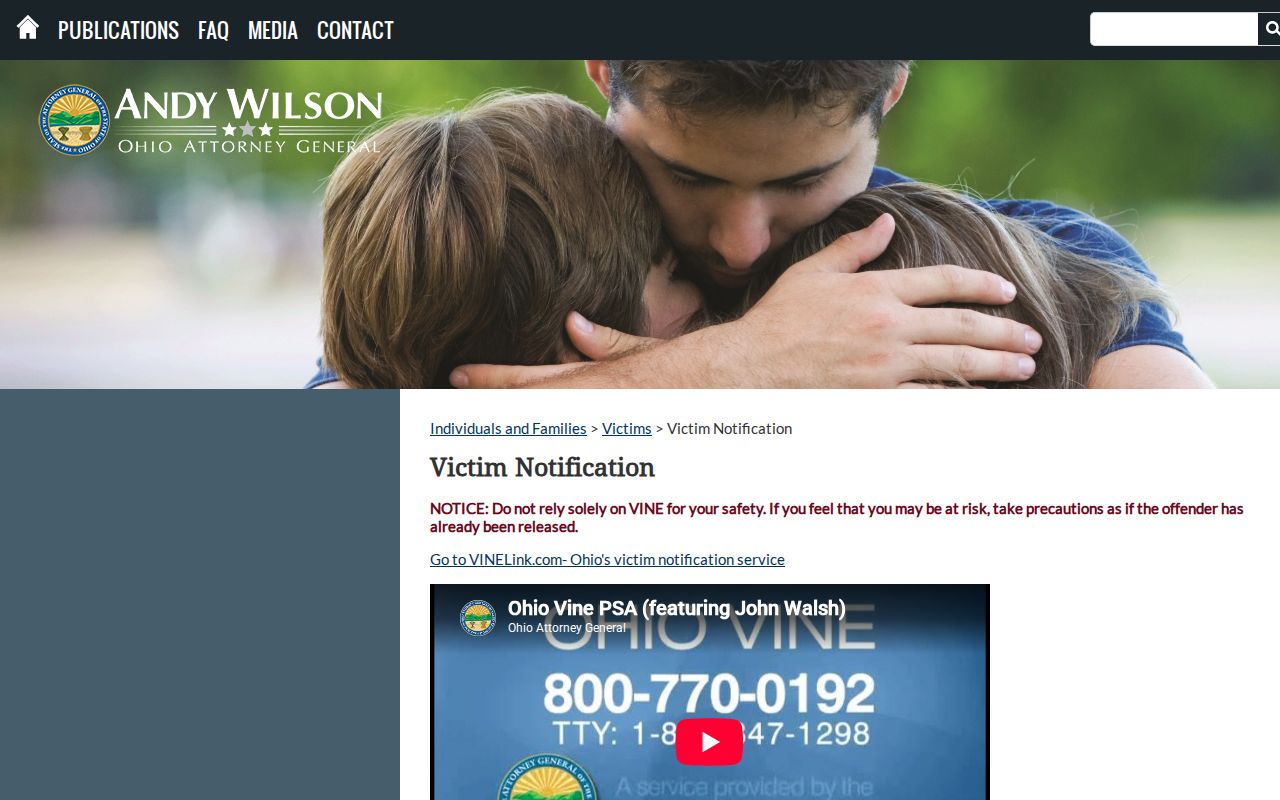
The official guidance confirms the notification role, while the matched source record supplies the person-specific event.
A county-jail search can be routed through the Ohio County Directory when the reporting agency is unclear. The county source should then confirm the event VINELink displayed.
Read Ohio VINELink Release Details
VINELink records can show a custody status or event, the reporting facility or agency, an offender identifier, and available date information. The exact fields depend on the source. A scheduled date for a sentenced person is not the same as a completed release event. A timestamp says when an event was reported or displayed, not necessarily when every linked legal action became final.
| VINELink item | What it can show | How to confirm it |
|---|---|---|
| Name and identifier | The person attached to the source record | Compare all available identity fields |
| Reporting agency | The jail or corrections source that supplied the event | Contact that agency, not an unrelated county |
| Custody status | The status then received from the source | Check the current jail or ODRC record |
| Facility or location | The custody site tied to the source event | Do not treat an old facility as a present address |
| Release or event date | A scheduled or reported custody change when supplied | Ask for the movement or release record |
| Notification options | The channels available for that record | Complete registration and confirmation |
For an Ohio state-prison record, the ODRC offender search provides the controlling Department fields.
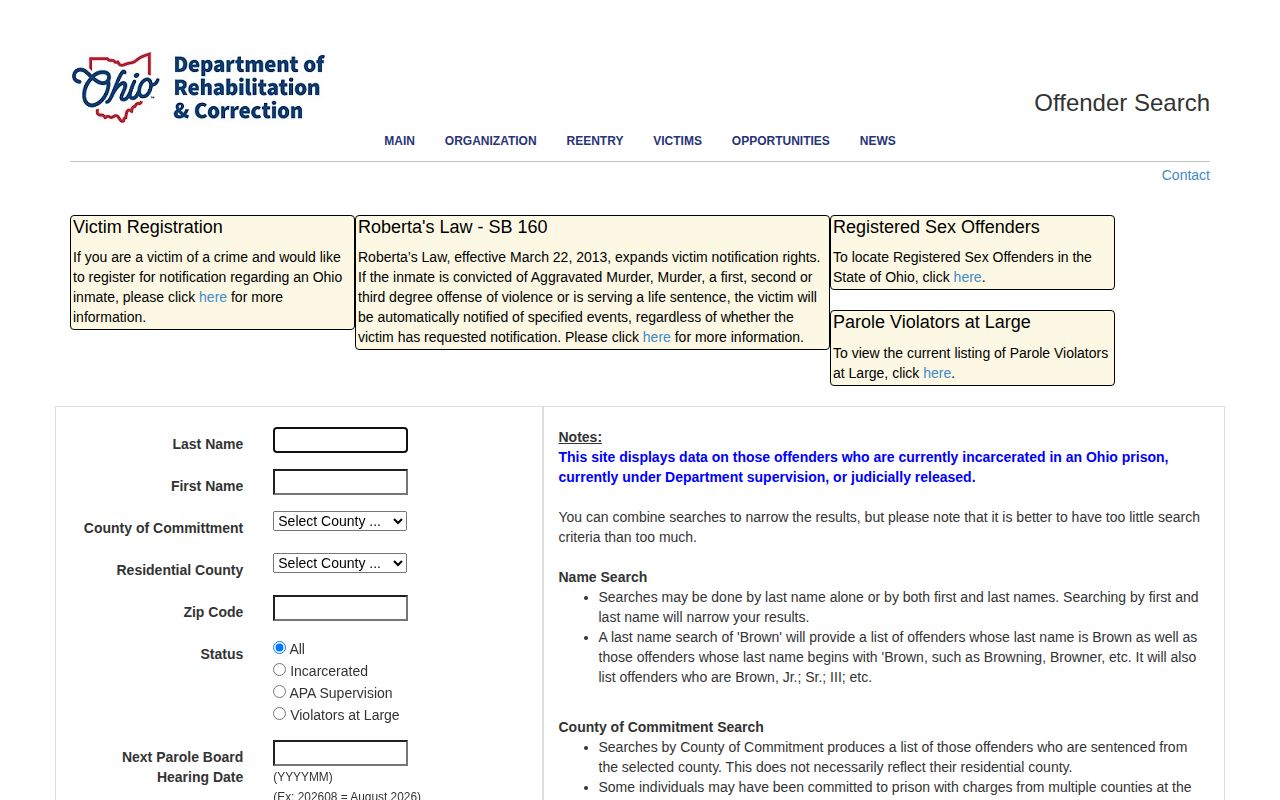
ODRC separates incarcerated, released, APA supervision, and violator categories, giving context that a brief alert cannot supply.
A person released from prison can still appear under APA supervision. Likewise, a transfer ends one facility stay without ending custody. The safest wording is narrow: VINELink reported a named event from a named agency at a stated time. Then add the confirming jail, ODRC, or court record.
Note: A release alert does not prove that a detainer, court condition, or state supervision term also ended.
Register Ohio VINELink Release Alerts
Registration begins from a matched person record. Official Ohio material supports phone, email, SMS text, and TTY notification. The channels offered on a given record may vary. Enter private contact data only in the official interface, verify that it was accepted, and keep the record identifier needed to return to the same registration.
- Complete the identity check and open the correct Ohio custody record.
- Select each notification method offered for that record. Follow the interface prompts for the contact channel.
- For telephone registration, create the private four-digit personal identification number requested by Ohio VINE.
- When an automated call arrives, enter the PIN followed by the pound sign to acknowledge the message as directed.
- Keep the source-agency name and confirm any reported release or transfer with that custodian.
The official Ohio VINE brochure describes phone, email, text, and TTY options as well as the PIN process. The PIN acknowledges telephone notice. It should remain private and should not be confused with an offender or booking number.
An alert is a prompt to verify. It is not a substitute for a release order, jail movement record, ODRC release detail, or supervision termination certificate. If the alert arrives late or conflicts with another source, ask the reporting agency to confirm its current status and event time.
Ohio VINE Participation Gaps
Ohio's deployment is broad in official descriptions, yet it remains source-fed infrastructure rather than a certified statewide archive. County jails, ODRC, and DYS may send custody data. That does not justify a promise that every municipal cell, regional partner, or county integration has equal coverage or an identical update pace.
This distinction is the central Ohio VINE quirk. The statewide brand tells a user where to begin. The reporting-agency line tells the user who owns the result. If no agency appears, if the expected jail is absent, or if a known status is stale, use the jail, ODRC, or committing court directly.
ODRC victim-services registration is also distinct from public VINELink registration. A person should not assume that enrolling in one automatically creates or updates the other. Follow the confirmation steps for the exact service being used and keep the agency contact tied to that enrollment.
Ohio VINELink Source Checks
The source-agency name determines the confirmation record. For a county jail, ask for booking and release date and time, release event or type, booking identifier, and whether the exit went to the community or another agency. If a receiving agency is recorded, request that field. The jail records the movement, while the local court docket records the legal order behind bond, dismissal, time served, or another disposition.
For an ODRC event, compare the offender number and current status. Then read admission, expected release or parole eligibility, parole or release detail, and any APA supervision fields. An alert that says release from prison does not show that parole or post-release control ended. If the public detail is incomplete, ODRC Central Records is the route for existing nonexempt chronology and discharge records.
DYS custody has its own source and age-sensitive record rules. Use the agency named in the Ohio VINE result and avoid transferring assumptions from an adult county jail or ODRC prison. A municipal holding record may be shorter lived still. If the expected source does not appear, contact the local custodian rather than selecting a record from a nearby agency.
The official Ohio courts directory routes a source check to the court that handled the case.
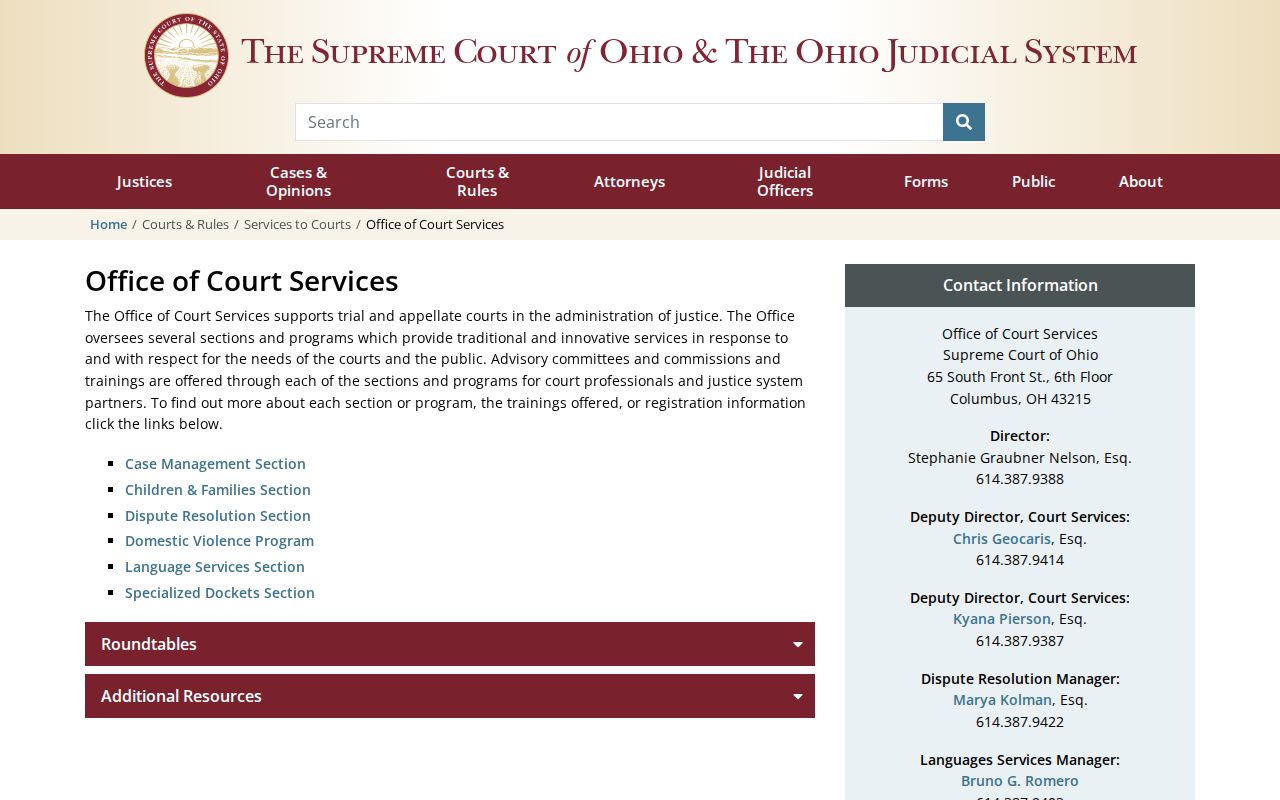
The directory is a routing tool, not one statewide trial-court search, so the local clerk still supplies the actual release or disposition entry.
| Ohio source | VINELink follow-up |
|---|---|
| County jail | Confirm the movement with the sheriff or jail and the reason with the local court |
| ODRC | Confirm status and release detail through ODRC, then check APA fields |
| DYS | Use the named youth-custody source and its permitted records process |
| Municipal holding site | Ask the municipal custodian because statewide completeness is not assured |
Record the time of both checks. A valid VINE alert and a later agency screen can differ because they represent different update points. The later source response should not be backdated to the alert time.
Confirm Ohio VINELink Release Events
Use a short confirmation chain. First, copy the VINELink status, agency, identifier, and event time. Second, open the official system for that custodian. Third, ask for the source record when the public screen is missing, stale, or unclear. A county jail can confirm a booking movement. ODRC can confirm a state status. The sentencing clerk can supply the order behind bond, dismissal, time served, judicial release, or another court act.
Federal Bureau of Prisons custody is outside Ohio VINELink's state and county path. The BOP locator searches federal records from 1982 forward and can show a release date and location. Its Released or Not in BOP Custody wording still does not rule out custody or supervision elsewhere.
The official BOP Inmate Locator is the correct federal comparison source.
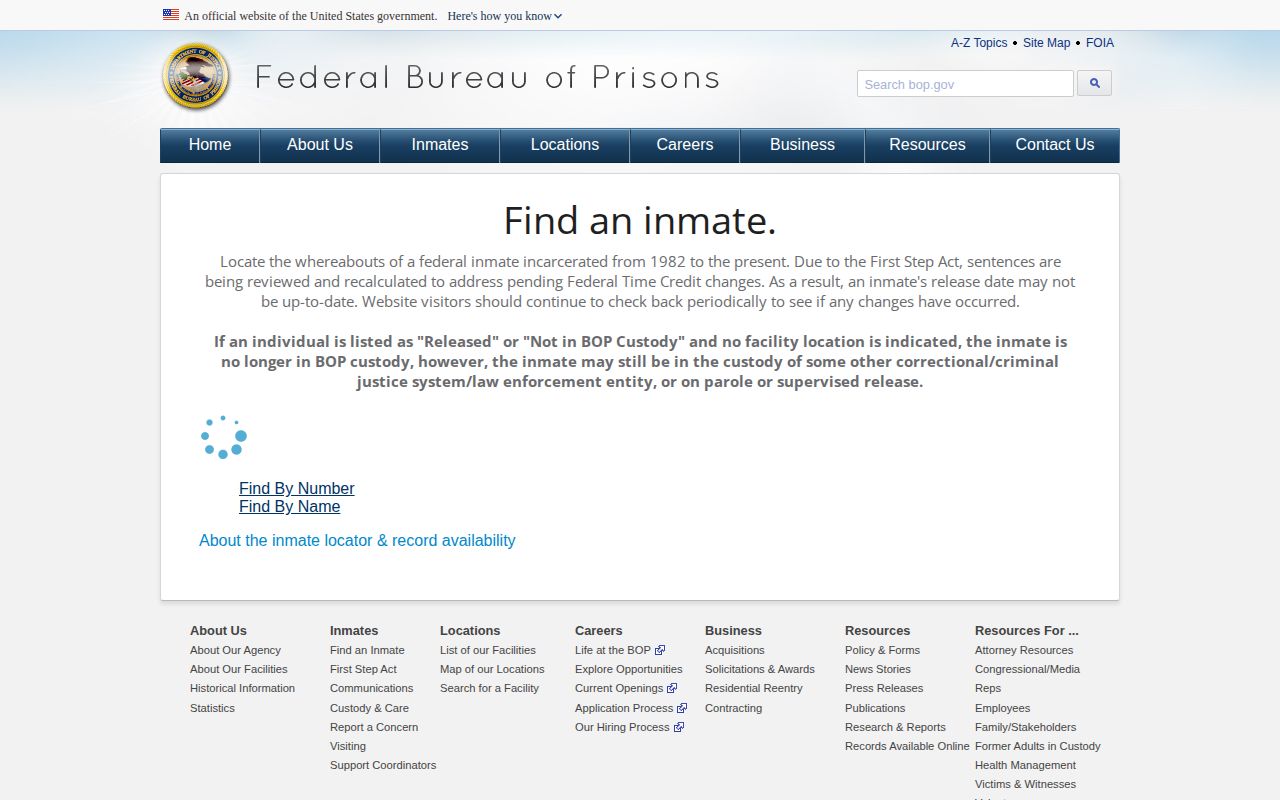
The separate federal interface shows why an Ohio VINELink no-result cannot answer every custody question.
ICE uses another federal locator with its own fields and short released-person window. Neither federal route turns VINELink into a national archive. Match the source to the custody episode being checked, then state only what that source confirms.
When proof matters, request the actual release or movement record. Give the full name, identifier, facility, and date span. Ask whether the exit was to the community or another agency and request the receiving agency when recorded. That record explains an alert far better than a screen capture alone.
ICE uses its Online Detainee Locator System for current detainees and people released from ICE custody within its stated recent window. It searches through an A-number and country of birth or exact name details. That narrow federal window is not an Ohio release archive, and it does not extend VINELink participation to immigration custody.
Notification and record proof serve different needs. An alert gives timely notice to recheck a status. A movement record states what the custodian recorded. A court entry states what the judge ordered. Keeping those roles separate allows a late alert, a transfer, or a later supervision record to be explained without forcing the sources to say the same thing.
The ODRC offender search page covers the state-prison confirmation path in depth when Ohio VINE reports an ODRC event.