
Ohio Parole Board Records
The official decision body is the Ohio Parole Board. It operates within the Ohio Department of Rehabilitation and Correction and the broader Adult Parole Authority framework. The Board considers parole for eligible sentence structures and performs other reviews described in its handbook and rules. It does not turn every prison sentence into a parole case.
A hearing sits between eligibility and a later custody event. Eligibility means the law permits consideration. A Board action records what happened at the review. Release occurs only when the governing decision and sentence computation lead to an actual exit. ODRC may then show release detail or APA supervision. These stages should remain separate in any timeline.
The Ohio Parole Board landing page is the starting point for its current handbook, notices, and rotating documents. Reopen that page when checking a record because a linked schedule or minutes file may change.
The official ODRC agency home is the source shown in the statewide agency capture.
The agency entry point provides context, but the person and month search is what ties a hearing to one verified ODRC identity.
- Eligibility
- The first point when the sentence may be considered under the governing law.
- Hearing or review
- A Board proceeding that can produce a grant, non-recommendation, continuation, or another recorded action.
- Parole grant
- A favorable release decision that still must be linked to later release processing and supervision.
- Rescission
- A Board action that withdraws a prior favorable decision under the applicable process.
Search Ohio Parole Hearing Months
Ohio's stable public calendar is not a traditional grid of all hearings. It is built into ODRC Offender Search. The field labeled for the next Parole Board hearing takes a six-digit year-and-month value in YYYYMM form. A search for one month returns people then scheduled in that period. The result is a rolling index, not a permanent copy of the Board's future workload.
- Open the official ODRC offender search and locate the next-hearing field.
- Enter the target month as four digits for the year and two for the month, such as a valid
YYYYMMvalue. - Keep other criteria sparse at first. Adding too many name, county, status, or location filters can suppress a valid match.
- Open the plausible result and compare offender number, date of birth, committing county, docket, offense, and sentence data.
- Record the lookup date. Repeat the search near the expected review because the published schedule can change.
The manifest capture of the official Ohio parole hearing month results shows the list produced by that calendar search.
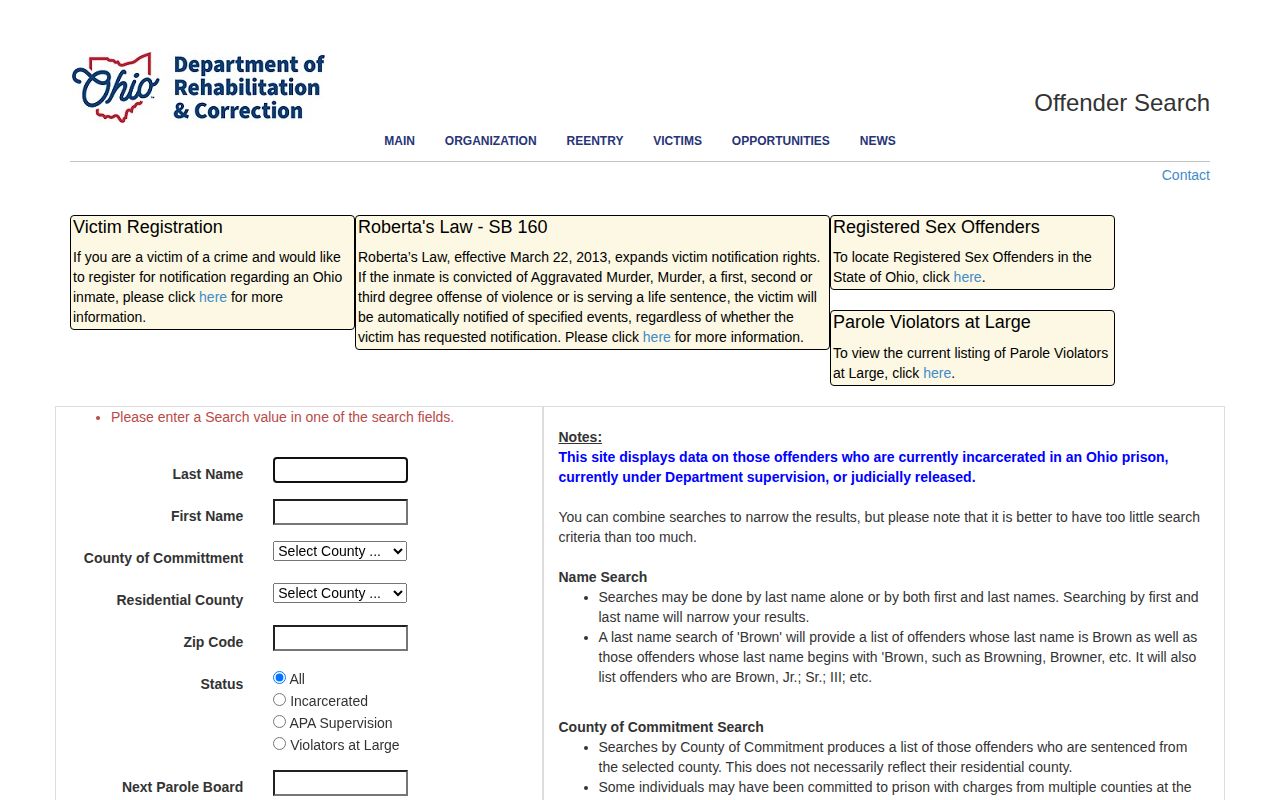
The list is useful for finding scheduled people in a month, but each row still needs identity checks against the detail record.
ODRC's definitions state that a case carrying a future date is ordinarily reviewed about two months before that date. That planning window helps explain why a result can change while the Board prepares its docket. It should not be treated as a fixed notice deadline or a guarantee that the review will occur exactly as first displayed.
Match Ohio Parole Hearing Identities
The offender number is the strongest public search key. ODRC numbers require an A, R, or W prefix and six digits, with a leading zero added to a five-digit female number. Name searches can use a last name alone or a first and last name, but common names create false matches. County of commitment identifies the sentencing origin, not the current prison or home county.
After opening a record, compare the number and date of birth first. Then review admission, offense, statute, docket, sentence, and committing county. A photograph may assist, but it is not enough to establish identity. The hearing month only narrows the schedule. It does not establish that a person with a similar name is the subject of the same case.
The ODRC search form places the hearing month among the person, status, commitment, and supervision criteria.
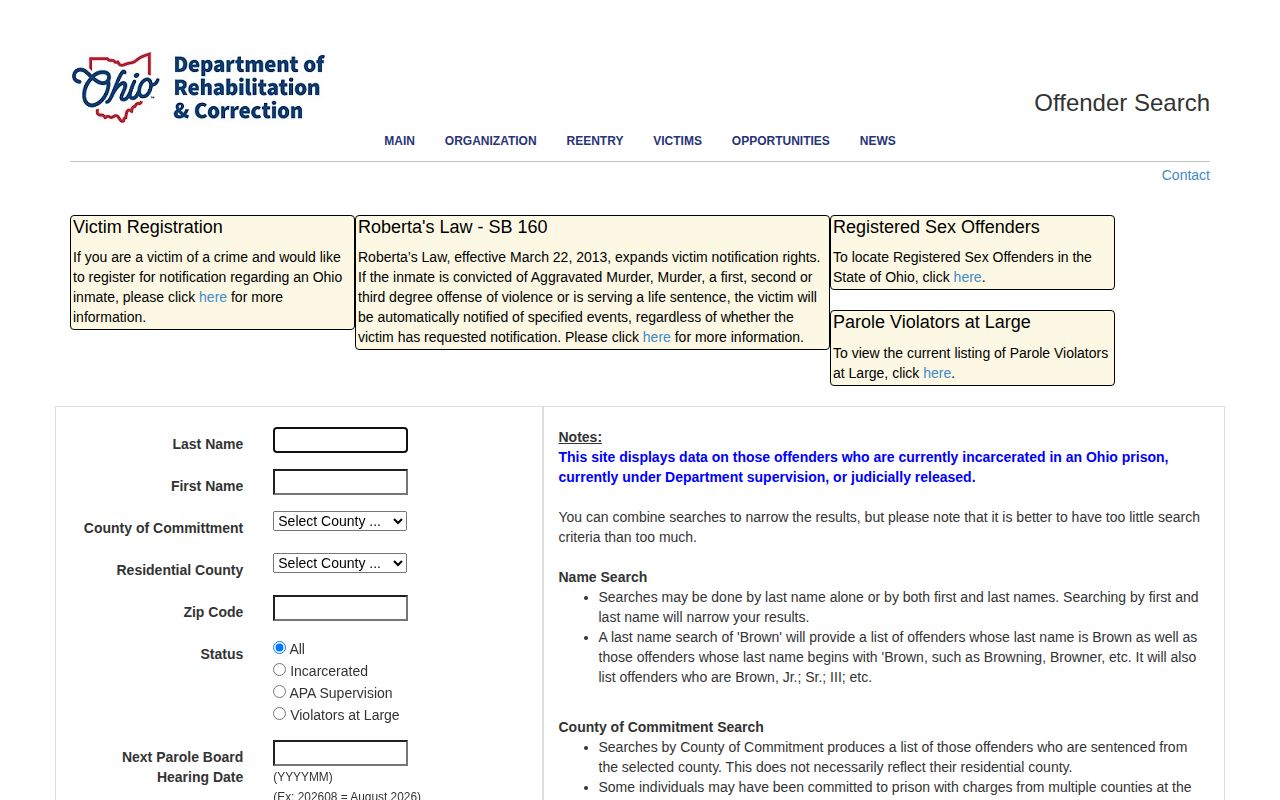
Starting with a month and offender number reduces ambiguity while avoiding an overfiltered search.
| Field | What it confirms | What it does not prove |
|---|---|---|
| Offender number | The ODRC record identity | That every other field is current |
| County of commitment | The sentencing source | Present prison or residence |
| Next hearing month | Current scheduled month in the public index | A grant or release |
| Expected Release Date/Parole Eligibility Date | A projected or eligibility date | Which meaning applies without context |
| Latest hearing/review result | The displayed Board phrase | That physical release is complete |
Find Ohio Parole Hearing Decisions
The person detail is the most direct public bridge from schedule to outcome. Find the field titled Latest Parole Board Hearing/Review Type & Results. Copy its wording exactly. Current records may show phrases such as FULL BOARD /PAROLE, CONTINUED HEARING/PAROLE, or TC REVIEW/TC DENIED. An unfamiliar code should be checked against Board materials, not translated from guesswork.
- Reopen the same verified offender record used for the hearing-month check.
- Locate the latest hearing or review type and results field. Save the exact displayed phrase and the lookup date.
- Compare the phrase with the current Board handbook, administrative rules, and any minutes linked from the Board page.
- Read the next-hearing and projected-date fields again. A continuation or denial may alter what comes next.
- Check status and parole or release detail before stating that a Board result produced physical release.
The official ODRC parole decision result view demonstrates where a person-specific Board result appears.
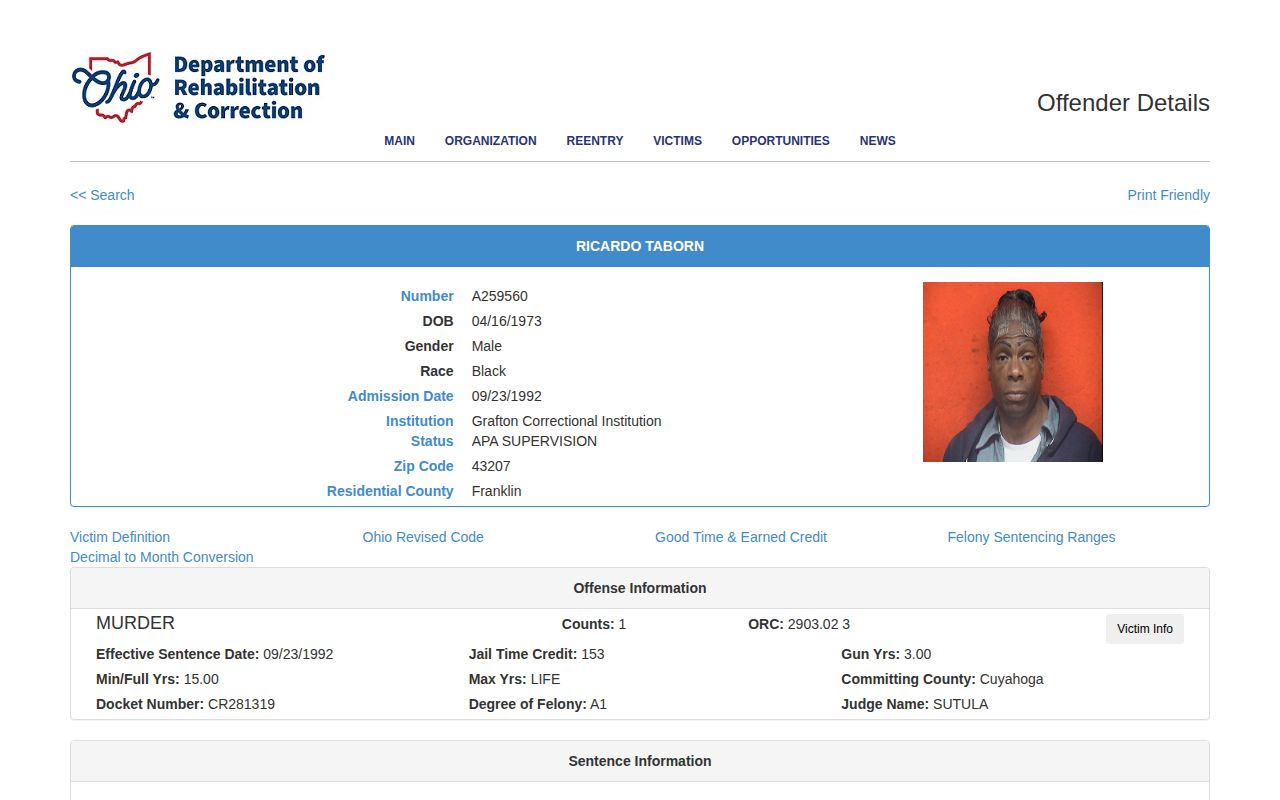
The field links the outcome to a verified offender record, which is safer than relying on a detached copy of old minutes.
No durable, standalone public database of every Ohio Parole Board decision was verified in the statewide research. Board minutes and the person's detail are the defensible public route. If a rotating document is linked, resolve the current link from the Board landing page instead of hardcoding a month that will age.
Note: A favorable Board result and an ODRC release status are related records, not interchangeable events.
Interpret Ohio Parole Hearing Outcomes
The Board handbook and Ohio administrative rules address grants, non-recommendations or denials, continuances, projected dates, transitional-control reviews, and rescission. Public screens can compress those actions into short codes. Preserve the code, then explain only what the linked Board source supports.
| Displayed action | Safe meaning | Next record to check |
|---|---|---|
| Grant or parole recommendation | A favorable Board action for an eligible case | Status, projected date, release detail, and later APA supervision |
| Denial or non-recommendation | No parole grant at that review | Board result and any newly listed hearing date |
| Continued hearing | The matter remains pending for later action or information | Updated month search and person detail |
| TC review or TC denied | A transitional-control review, not an ordinary final-discharge label | Exact result, sentence dates, and ODRC definitions |
| Rescission | A prior favorable action was withdrawn through Board process | Current minutes, status, and release detail |
The ODRC definitions page supplies the official vocabulary around parole eligibility, projected dates, and review information.
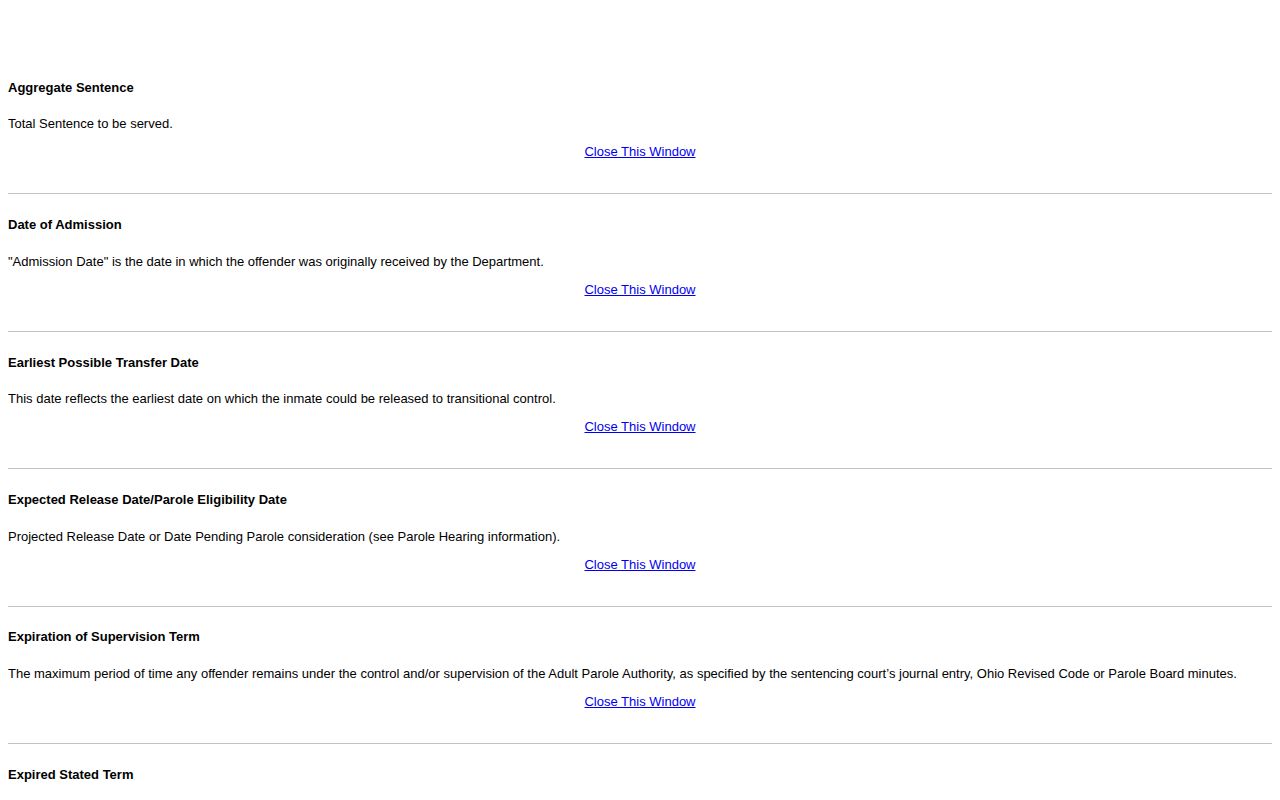
Those definitions prevent a short Board code from being stretched into a release claim that the record does not make.
A grant can lead toward release, yet timing may still depend on the sentence, projected date, institutional processing, and any lawful hold. Once the person leaves prison, the status can move to APA supervision. The Ohio parole and probation record then becomes the better source for the community-supervision phase.
Ohio Parole Hearing Eligibility
ORC 2967.13 is the core Ohio parole-eligibility statute. It contains category-specific rules, including minimum-term, 20-year, 25-full-year, and 30-full-year structures for covered life sentences. The category matters. A person cannot safely infer a hearing month from the conviction label or sentence length alone.
Eligibility authorizes consideration. It does not direct the Board to grant release. Life without parole and specified Chapter 2971 cases fall outside the ordinary parole-eligibility route. Modern non-life indefinite sentences may use a different minimum-and-maximum framework, so their expected-release fields should not be read as old-law parole dates.
The ODRC detail label itself warns of this split by combining Expected Release Date/Parole Eligibility Date. Determine which date regime governs before drawing a conclusion. The judgment entry, sentence structure, current ODRC status, and Board result belong in the same review.
The official ODRC detail layout shows how the combined date label appears with other sentence and supervision data.
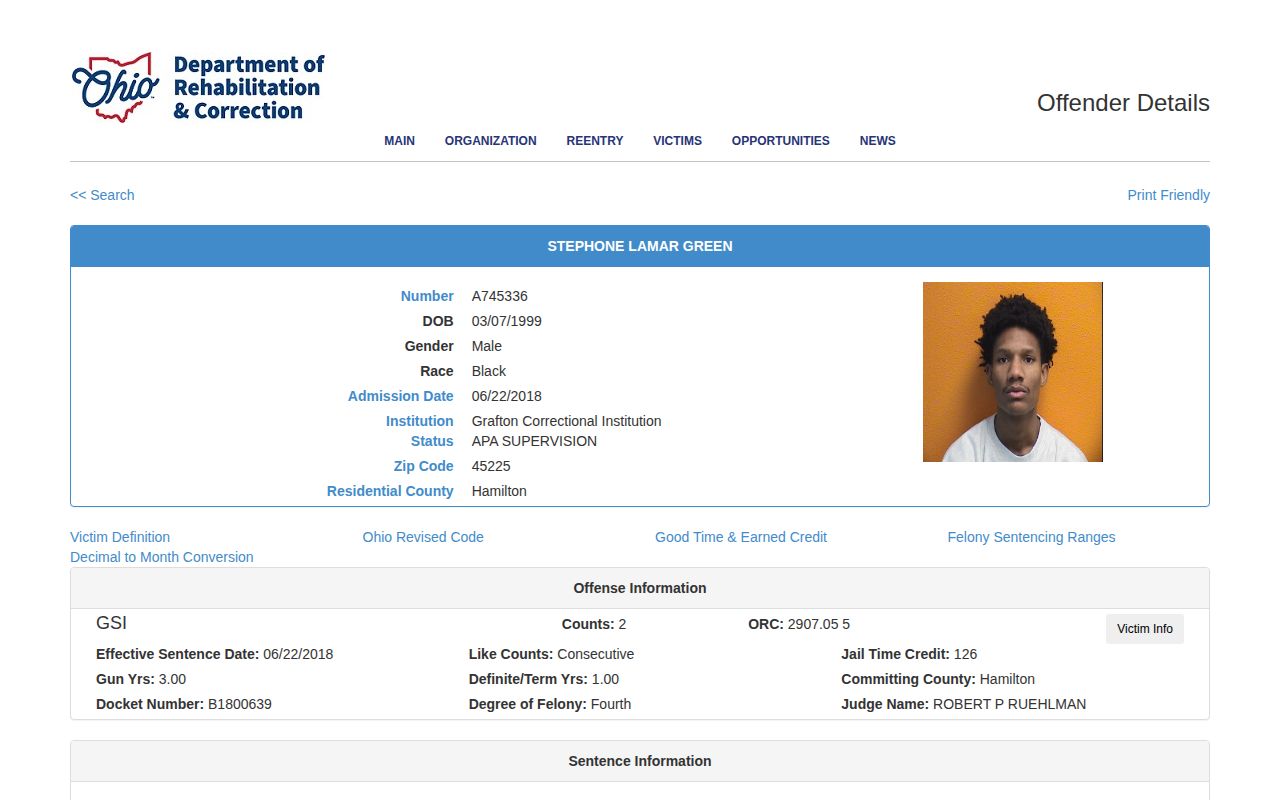
The surrounding fields decide whether the date concerns possible Board review, projected prison release, or a record already in supervision.
Confirm Ohio Parole Release
A sound chronology uses four checkpoints: sentence eligibility → scheduled review → Board result → custody or supervision status. The monthly search handles the second point. The latest-result field and minutes handle the third. Status, release detail, and APA fields handle the fourth. No single checkpoint should answer all four questions.
If public entries conflict, preserve screenshots or copies with their access dates. Then ask ODRC Central Records for existing nonexempt records tied to the offender number, docket, committing county, and time span. Request the hearing or release chronology by name instead of asking the office to create a new account of what occurred.
ODRC warns that sentence information may be incomplete. A missing public result can also reflect search inputs or online scope. The best conclusion is narrow: report the exact scheduled month, result phrase, status, and access date, then distinguish them from the actual release event.
Board minutes and a person detail may be captured at different times. If the two do not align, check whether the detail shows a later review, a continued matter, or a changed projected date. The word latest in the result field is important. It means an earlier action can be displaced by a newer Board event without making the old document false for its date.
Use Central Records when the public chronology remains unclear. Identify the person with full name, offender number, date of birth, committing county, docket, and the hearing span. Ask for existing nonexempt Board or release records that resolve the displayed result. Ohio law restricts parts of an institutional and APA file, so exemptions and redactions may apply.
Separate Ohio Parole Date Meanings
One ODRC record may place several dates near each other. Admission is the start of the state custody chronology. A next hearing month concerns Board scheduling. The expected release or parole eligibility label can describe projection or eligibility. A POA/PRD date means parole on or after or projected release date. A supervision start belongs to the later community phase.
Copy the field names with each date. Do not sort the dates into a new timeline and drop their labels. A past eligibility date can coexist with incarceration after a denial or other Board action. A future projected date can change. A supervision start is stronger evidence that prison custody ended, but it does not show that APA authority later terminated.
This field-by-field method also protects against a stale institution name. An APA record can retain the last prison even though the current status is supervision. Status governs the present ODRC category, while the institution can remain part of the person's history.